
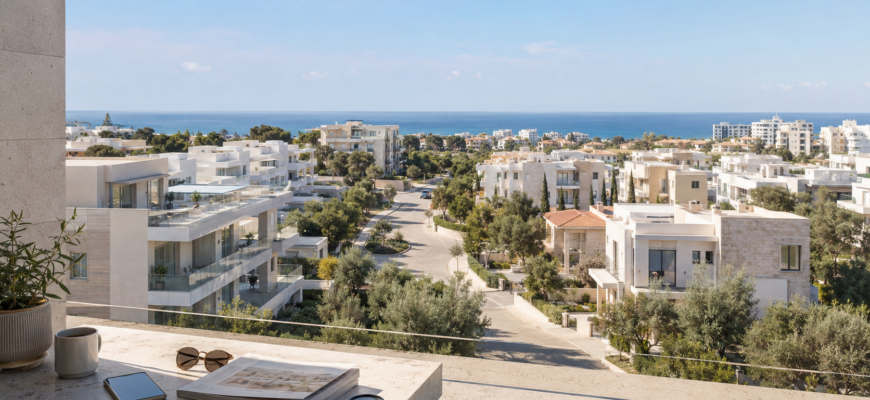
- The Cyprus Real Estate Market in 2026: An Expert Overview
- Cyprus Property Price Dynamics: 2024-2026 Market Trends
- 2026 Cyprus Property Prices: Limassol vs. Paphos vs. Larnaca vs. Nicosia
- The 11 Critical Red Flags of an Overpriced Property
- Your Verification Toolkit: How to Independently Assess a Property’s True Value
- Step 1: Conduct a Personal Comparative Market Analysis (CMA)
- Using Online Portals (e.g., Bazaraki, Spiti24) to Find ‘Sold’ Price Data
- The ‘Three Agent’ Method: Requesting Valuations for an Unbiased Range
- Step 2: Insist on an Independent RICS-Certified Valuation
- Step 3: Scrutinize the Title Deeds & Land Registry Data for Encumbrances
- Step 4: Calculate the Total Cost of Ownership (See Calculator Below)
- Calculate Your Total Cost of Buying Property in Cyprus 2026
- A Step-by-Step Guide to Buying Property in Cyprus for Foreigners
- Cyprus Property Market Forecast & Investment Hotspots: 2026-2028
- Price Growth Projections: What Banks and Agencies Predict for 2026-2028
- Emerging Hotspots vs. Overheating Bubbles: Where to Invest
- Areas with Strong Fundamentals for Growth (e.g., West Paphos, Larnaca Suburbs)
- Neighborhoods to Approach with Caution in 2026
- Leveraging Your Investment: The Cyprus Permanent Residency Program
- How a €300,000+ Property Investment Secures EU Residency
- Featured Real Estate for Sale in Cyprus
- Cyprus Property Buyer’s FAQ (Frequently Asked Questions)
By Oliver Bennett, 16-Year Cyprus Real Estate Expert
The Cyprus Real Estate Market in 2026: An Expert Overview
From my perspective as a long-term resident, the Cyprus real estate market in 2026 remains a picture of resilient stability, a stark contrast to the volatility seen elsewhere. The overview is positive, thanks to consistent foreign investment and a robust demand for property across the key coastal districts. This isn’t a fleeting trend; it’s fueled by the island’s solid economic growth, a resurgent tourism sector, and the undeniable benefits of EU membership.
The key market trends I’m seeing on the ground are moderate, sustainable growth in established cities and a fascinating surge of interest in suburban areas that offer more space and a quieter lifestyle. This solidifies the investment appeal of real estate in Cyprus for both lifestyle buyers and portfolio investors.
Cyprus Property Price Dynamics: 2024-2026 Market Trends
Breaking down the numbers, average property prices in Cyprus have charted a steady upward course from 2024 to 2026. My analysis shows apartments appreciating by 4–6% annually, while villas in prime coastal locations are seeing even stronger growth of 5–8%.
This momentum in price dynamics isn’t random; it stems from a classic supply-and-demand scenario. We have a limited supply of quality housing in sought-after areas like Limassol and Paphos, met with a continuous inflow of buyers from Central Europe and the Middle East, many of whom are relocating for business or securing a premium Mediterranean lifestyle.
2026 Cyprus Property Prices: Limassol vs. Paphos vs. Larnaca vs. Nicosia
In Cyprus, the golden rule of real estate is “location, location, location.” This determines the price per square meter and potential rental yield more than any other single factor.
Think of it like choosing a local wine: the soil and microclimate dictate the final flavor. Similarly, coastal cities command a premium for their vibrant lifestyle and sea views, while inland and suburban areas offer entirely different investment risk-and-reward profiles, perfect for those with different goals for their property in Cyprus.
Cyprus Regional Property Comparison (2026)
| City | Avg. Price per m² (Apartment) | Avg. Price per m² (Villa) | Avg. Rental Yield (%) | Market Outlook |
| Limassol | €3,200 | €4,100 | 4.5% | Strong Growth |
| Paphos | €2,100 | €2,800 | 5.8% | Stable |
| Larnaca | €1,900 | €2,400 | 6.2% | Emerging |
| Nicosia | €1,700 | €2,200 | 5.1% | Stable |
The 11 Critical Red Flags of an Overpriced Property
“In my 16 years here, the costliest mistake I see isn’t negotiation; it’s failing to spot an overpriced property from the start. Here are the 11 signs I teach every client to look for.”
— Oliver Bennett, Cyprus Real Estate Expert
- 1. Price Outlier: Inconsistency with Comparable Local Sales (Comps) If the asking price is 15-20% higher than similar properties sold in the same area within the last six months, it’s a major warning sign. An agent should be able to provide you with this sales data immediately.
- 2. Stale Listing: On the Market for 6+ Months Without a Price Drop A property that has been sitting on the market for over half a year without any price adjustment often indicates a seller with unrealistic expectations, disconnected from the current market value.
- 3. “Upgrades” Fallacy: Overvaluing Minor, Personal, or Outdated Renovations A new kitchen adds value, but gold-plated taps or a 10-year-old renovation don’t justify a significant price hike. Sellers often try to recoup 100% of their upgrade costs, which the market rarely supports.
- 4. Low Rental Yield: The Projected Rent Doesn’t Justify the Asking Price For an investment, the numbers must work. If the projected annual rental income is less than 4% of the asking price in a high-demand area, the property is likely overvalued from a financial standpoint.
- 5. Valuation Mismatch: Asking Price Significantly Exceeds an Independent Bank Appraisal When you apply for a mortgage, the bank conducts its own valuation. If their number is substantially lower than the asking price, trust the bank’s conservative assessment—it’s based on cold, hard data.
- 6. Vague Price Justification: The Agent or Seller Can’t Provide Data-Backed Reasoning When you ask “How did you arrive at this price?” the answer should involve comparable sales data, not vague statements like “it’s a sought-after area” or “the owner put a lot of love into it.”
- 7. Physical & Legal Flaws: Ignoring Hidden Costs of Repairs or Title Deed Issues An attractive price can mask expensive problems. A missing or compromised Title Deed, structural issues, or the need for major renovations can make an apparent bargain an overpriced nightmare.
- 8. Emotional Pricing: Seller’s Attachment Inflating the Value Beyond Market Reality The seller’s fond memories of raising their family in the house add zero euro to its market value. Emotional pricing is one of the most common reasons a property is listed too high.
- 9. Future Promises: Price Based on Unconfirmed Infrastructure or “Future Potential” A price based on a “planned” marina or a “future” golf course that isn’t yet under construction is pure speculation. You should only pay for the reality that exists today, not a developer’s promise for tomorrow.
- 10. Misleading Marketing: Professional Photos Hiding Obvious Detriments Wide-angle lenses can make small rooms look palatial, and clever editing can hide dampness or poor views. If the property looks dramatically different in person, the marketing is hiding flaws and justifying an inflated price.
- 11. Ignoring Total Cost: The Price Tag Hides High Communal Fees, Taxes, or Levies A tempting sale price can be a smokescreen for exorbitant annual costs. High communal fees, upcoming strata levies, or significant property taxes can make the total cost of ownership far higher than a comparable, slightly more expensive property.
Your Verification Toolkit: How to Independently Assess a Property’s True Value
Spotting red flags is the first step. Next, you need to verify the true market value yourself. This isn’t just about saving money; it’s about making a secure investment. Here’s the toolkit I use with every client.
Step 1: Conduct a Personal Comparative Market Analysis (CMA)
Using Online Portals (e.g., Bazaraki, Spiti24) to Find ‘Sold’ Price Data
Don’t just look at what properties are listed for; try to find data on what they have actually sold for. While Cyprus portals primarily show asking prices, you can track listings over time to see price reductions, which gives you clues about the market’s direction and seller flexibility. Compare your target property to at least three others of similar size, condition, and location.
The ‘Three Agent’ Method: Requesting Valuations for an Unbiased Range
Approach three different real estate agents and ask for a free valuation of the property you’re interested in, posing as a potential seller. This gives you a realistic price range from active professionals in that specific area. You’ll quickly see if the current asking price is an outlier. Our blog contains more detailed guides on advanced valuation techniques.
Step 2: Insist on an Independent RICS-Certified Valuation
Let me be clear: a bank valuation is designed to protect the lender, not you, the buyer. An independent valuation conducted by a RICS-certified surveyor is the ultimate safeguard. They assess the property’s actual condition, check for legal encumbrances, and provide a value based on recent, verified sales data—all before you are legally bound by a contract. In my experience, this report is the single best investment you can make during the buying process.
Step 3: Scrutinize the Title Deeds & Land Registry Data for Encumbrances
The Title Deed is the ultimate proof of ownership. Your lawyer must conduct a thorough search at the Land Registry to ensure a “clean” title exists, free of mortgages, liens, or other legal claims (known as encumbrances or memos). A property without a separate Title Deed can present significant risks and delays, impacting its true value.
Step 4: Calculate the Total Cost of Ownership (See Calculator Below)
The final step in your verification is to look beyond the price tag. You must calculate the full “landed cost” of the property. This includes all fees, taxes, and potential future expenses. Use the calculator below to get a clear picture of what you will actually spend to avoid any surprises at the closing table.
Calculate Your Total Cost of Buying Property in Cyprus 2026
I’ve seen too many buyers get a shock when they realize the purchase price is only part of their total budget. This calculator is designed to provide a realistic estimate of the additional costs, including stamp duty, transfer fees, VAT (for new builds), and legal fees, based on the current 2026 rates for buying property.
A Step-by-Step Guide to Buying Property in Cyprus for Foreigners
Navigating the legal process of buying property in Cyprus can seem daunting, but it’s a well-trodden path. Here is a clear, step-by-step guide to ensure your purchase is smooth and secure.
- Legal Preliminaries: EU vs. Non-EU Buyer Requirements First, understand your legal status. EU citizens face minimal restrictions, while non-EU buyers must apply for permission from the Council of Ministers—a standard procedure typically handled by your lawyer after the contract is signed.
- Finding Your Property & Making a Reservation Offer Once you’ve found your ideal home, you’ll make a formal offer and sign a reservation agreement, which takes the property off the market. This usually involves a small deposit of 1-2% of the purchase price.
- Appointing a Lawyer & Conducting Due Diligence (Crucial for avoiding overpriced deals) This is the most critical step. Appoint an independent lawyer to conduct all legal checks. Their due diligence is your shield against potential problems and forms a key part of avoiding the overpriced property traps mentioned earlier. For comprehensive support, established agencies like our strategic partner DOM Real Estate Agency in Cyprus can provide a list of vetted legal experts.
- Signing the Contract of Sale & Stamping at the Land Registry After your lawyer confirms all is in order, you will sign the Contract of Sale. Your lawyer must then register this contract at the District Land Registry Office within 60 days. This “stamping” protects your ownership rights until the Title Deeds are issued.
- Securing Title Deeds: The Final Step to Full Ownership The final step is the transfer of the Title Deeds into your name. Once this is complete, you are the full, legal owner of the property. Remember to use the advice in the Verification Toolkit section to ensure everything is in order before this stage.
Cyprus Property Market Forecast & Investment Hotspots: 2026-2028
Looking ahead, the forecast for the Cyprus property market remains bright, especially for well-informed investors. Here’s what my research and local experience suggest for the coming years.
Price Growth Projections: What Banks and Agencies Predict for 2026-2028
Major financial institutions echo my on-the-ground sentiment. Reports from the Bank of Cyprus and PwC project continued annual price growth of 3–5% through 2028, particularly in established coastal zones. This growth is underpinned by strong relocation demand and significant infrastructure upgrades, such as the Larnaca marina. For the latest analysis on these trends, I recommend keeping an eye on our Cyprus Life & Real Estate Blog.
Sources: Bank of Cyprus Real Estate Market Report 2025; PwC Cyprus Real Estate Market Outlook 2026.
Emerging Hotspots vs. Overheating Bubbles: Where to Invest
Areas with Strong Fundamentals for Growth (e.g., West Paphos, Larnaca Suburbs)
While Limassol’s city center is robust, I see tremendous potential in the suburbs of Larnaca (like Pervolia and Oroklini) and the villages in West Paphos (like Peyia and Tala). These areas offer better value, growing infrastructure, and the authentic Mediterranean lifestyle many buyers are searching for, promising strong capital growth.
Neighborhoods to Approach with Caution in 2026
I advise caution in micro-markets that have seen unusually rapid price spikes without corresponding infrastructure development. Some isolated areas, driven purely by short-term trends, may be approaching a price ceiling. It’s vital to differentiate between sustainable growth and a speculative bubble.
Leveraging Your Investment: The Cyprus Permanent Residency Program
A significant driver for the market is the Cyprus Permanent Residency Program, a straightforward path to securing a foothold in the EU. This isn’t just a visa; it’s a strategic life investment for you and your family.
How a €300,000+ Property Investment Secures EU Residency
By investing a minimum of €300,000 (plus VAT) in a new-build residential property, non-EU nationals can obtain permanent residency in Cyprus for themselves, their spouse, and their dependent children. This program transforms a real estate purchase into a gateway to EU living. To explore qualifying options, you can browse listings dedicated to Cyprus property investment.
Featured Real Estate for Sale in Cyprus
To give you a tangible feel for the market, here are a few examples of properties currently available. These curated listings represent the kind of value and lifestyle opportunities that exist when you know where to look. You can explore a broader selection of Cyprus real estate for sale to find a home that matches your specific criteria.
Cyprus Property Buyer’s FAQ (Frequently Asked Questions)
Are property prices negotiable in Cyprus, and by how much on average?
Yes, prices are almost always negotiable. A realistic negotiation range is typically 5-10% below the asking price, especially for resale properties. However, for a property that is new to the market and priced fairly from the start, the flexibility might be less. The key is to justify your offer with comparable sales data.
What is the single biggest mistake buyers make when assessing property value?
In my experience, the biggest mistake is falling for emotional pricing and failing to conduct independent due diligence. Buyers often trust the initial asking price and nice photos, forgetting to verify the value with a RICS valuation and a thorough legal check of the Title Deeds.
How much should I budget for fees and taxes on top of the property price? (See calculator above)
A safe estimate is to budget an additional 5-10% of the purchase price to cover all associated costs. For new properties, you must also account for VAT (currently 19%, reducible to 5% for a primary residence). Our Total Cost Calculator above gives a detailed breakdown.
Can I get a mortgage in Cyprus as a non-resident in 2026?
Yes, it is possible for non-residents to obtain a mortgage from Cypriot banks, but the process is more stringent than for residents. You will typically be required to provide a larger down payment (around 30-40%) and undergo a thorough income and credit assessment.
Does buying an overpriced property impact my Permanent Residency application?
Indirectly, yes. To qualify for the Permanent Residency program, you must prove you have invested a minimum of €300,000 (+VAT) in a new property. If you overpay for a property that is later valued significantly lower by an official surveyor, it could raise questions during the due diligence phase of your application, although the purchase price on the contract is the primary document.
New Build vs. Resale: Which offers better value and less risk of overpaying in 2026?
Both have pros and cons. A new build qualifies you for the Permanent Residency program and the 5% reduced VAT rate. A resale property is often in a more established location and has more room for negotiation, potentially offering better immediate value. The risk of overpaying exists with both; the key is not the property’s age but the rigor of your valuation and due diligence process.