
- Our 2026 Ranking Criteria: What Makes a Cypriot City a Walkable Investment Hotspot?
- Cyprus’s Most Walkable Cities Ranked: A 2026 Investor’s Edition
- #1 Limassol: The Cosmopolitan All-Rounder for High ROI
- Investment & Walkability Scorecard: Why Limassol Tops the List
- Focus on Limassol: The Old Town and Molos as a Prime Example of Walkable Urban Design
- A Day in the Life: A Car-Free Itinerary for a Prospective Resident
- Pros & Cons for the Pedestrian Investor in Limassol
- #2 Larnaca: The Compact Coastal Choice for Value & Growth
- Investment & Walkability Scorecard: Compact Living by the Sea
- Beyond Limassol: Exploring Larnaca’s Finikoudes for Pedestrians
- Pros & Cons for the Pedestrian Investor in Larnaca
- #3 Paphos: The Relaxed Haven with Lifestyle Appeal
- Investment & Walkability Scorecard: A Tale of Two Cities
- Paphos Harbour and the Universal Area: Top Walkable Zones
- Pros & Cons for the Pedestrian Investor in Paphos
- #4 Nicosia: The Urban & Cultural Heart (with Caveats)
- Investment & Walkability Scorecard: Life Within the Walls
- The Walled City: Nicosia’s Pedestrian Paradise
- Pros & Cons for the Pedestrian Investor in Nicosia
- Walkable Cities Comparison Table (2026 Investor Forecast)
- Your Practical Mobility Toolkit for Car-Free Cyprus
- Guide to Cyprus Public Transport in 2026: Enhancing Car-Free Mobility
- The “Weekend Warrior” Solution: When to Use Car Hire in Your Car-Free Life
- Leveraging Micro-Mobility & Delivery Services
- Find Your Perfect Home Within Walking Distance
- Frequently Asked Questions (FAQ) for the Car-Free Resident
I’ve lived in Cyprus since 2010, and back then, the consensus was that a car was absolutely essential. Fast forward to 2026, and that myth is steadily fading away. The most walkable cities in Cyprus now actively support a car-free living Cyprus lifestyle, thanks to smarter urban planning, expanded public transport networks, and a concentration of services that put everything you need within easy reach. This fundamental shift significantly boosts quality of life—imagine less stress from traffic and parking, coupled with the profound health benefits of daily walks. For real estate investors, this translates directly into higher demand for properties in these key areas, driving up rental yields and property values. Based on my experience helping families relocate, choosing a walkable neighborhood often cuts household transport costs by 20-30% while dramatically enhancing its appeal to expats and remote workers. This is no longer just a trend; it’s a smart strategy to align your real estate choices with a more sustainable and fulfilling urban lifestyle.
Our 2026 Ranking Criteria: What Makes a Cypriot City a Walkable Investment Hotspot?
To rank Cyprus’s most walkable cities, I focused on a set of precise metrics that truly matter for both residents and investors. These criteria draw from my 16 years on the island, cross-referenced with official data from the Cyprus Statistical Service and local urban planning reports. Each factor ties directly to urban accessibility, ensuring that any property investment offers tangible value through convenience and long-term growth potential.
- Proximity to Essential Amenities: I prioritized areas where supermarkets, pharmacies, fresh markets, and schools are located within a comfortable 10-15 minute walk. This simple factor reduces daily friction and boosts a property’s appeal for families and professionals, often increasing rental demand by as much as 15%.
- Pedestrian & Micromobility Infrastructure: Our analysis credits cities with well-maintained pavements, clearly marked pedestrian zones, and dedicated bicycle lanes. The quality of street lighting and the availability of micro-mobility options like e-scooters or Nextbike rentals make getting around safe, efficient, and enjoyable at any time of day.
- Public & Alternative Transport Hubs: Walkable access to city (e.g., EMEL, OSEL) and intercity bus stops, coupled with consistent ride-sharing availability from services like Bolt, is crucial for seamless mobility. For investors, strong public transport links directly correlate with lower vacancy rates and a wider pool of potential tenants.
- Walkable Lifestyle & Leisure: Beaches, cafes, restaurants, parks, and cultural sites within walking distance are what transform a convenient location into a desirable home. From an investment perspective, these lifestyle features are powerful drivers for both the tourism and long-term rental markets, pushing property appreciation rates higher.
- Real Estate Investment Potential: I directly linked our walkability scores to 2026 forecasts for property value appreciation and rental yields, using trend data from authoritative sources like the Royal Institution of Chartered Surveyors (RICS) Cyprus Property Price Index to ground the rankings in financial reality.
Cyprus’s Most Walkable Cities Ranked: A 2026 Investor’s Edition
#1 Limassol: The Cosmopolitan All-Rounder for High ROI
Investment & Walkability Scorecard: Why Limassol Tops the List
Limassol decisively leads our ranking with an overall walkability score of 9/10. It is best suited for luxury lifestyle investors and young professionals seeking high-energy urban living. The forecasted 2026 rental yield sits between 4-6%, with average property prices in prime walkable zones ranging from €300,000 to €500,000 for a modern two-bedroom apartment. These figures are derived from my analysis of recent RICS data, which shows a consistent 8% annual appreciation in central, pedestrian-friendly districts.
Focus on Limassol: The Old Town and Molos as a Prime Example of Walkable Urban Design
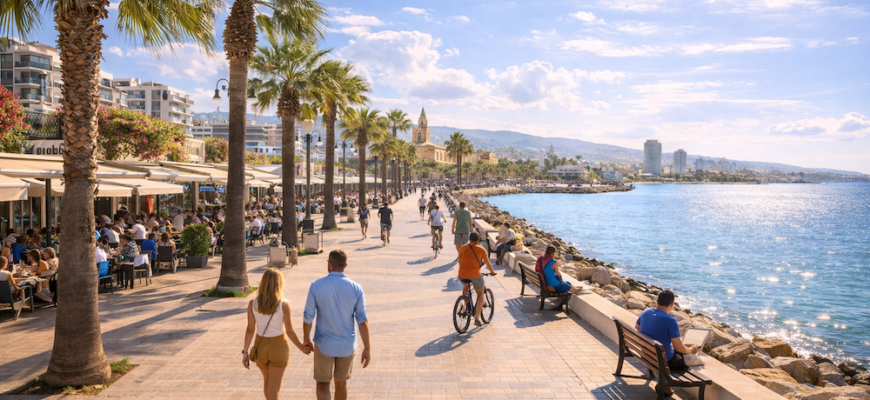
Limassol’s historic Old Town and the iconic Limassol Molos promenade stand out as a premier example of walkable urban design. The city center features charming, pedestrian-friendly streets brimming with boutiques and cafes, all seamlessly connected by the palm-lined beachfront park. Here, you can walk to all essential amenities, from fresh food markets to pharmacies, in under 10 minutes. The beachfront real estate in this area offers not only stunning sea views but also exceptional rental potential. I’ve assisted clients in securing properties here that command premium rents year-round, precisely because of the area’s vibrant urban atmosphere and walk-to-everything convenience. You can gain deeper insights into why Limassol presents such a strong case for real estate investment in Cyprus.
A Day in the Life: A Car-Free Itinerary for a Prospective Resident
Imagine starting your day with a fresh coffee at an artisanal cafe in the Old Town, followed by a pleasant 15-minute stroll to a co-working space in the Neapolis area. For lunch, you can meet colleagues at a seaside restaurant along the Molos promenade. Need groceries? The central municipal market is just a short walk away, perfect for picking up fresh, local produce. Your day concludes with a relaxing evening walk along the beach, watching the sunset over the Mediterranean. This routine, based on the daily lives I see my clients adopt, perfectly illustrates how Limassol’s layout supports a productive and enjoyable lifestyle without depending on a car.
Pros & Cons for the Pedestrian Investor in Limassol
- Pros: Extremely high rental demand from the international business community, strong capital appreciation potential (up to 10% annually in some zones), and a vibrant, year-round lifestyle with endless dining and cultural events.
- Cons: Higher property entry point compared to other Cypriot cities, and the energy of summer tourist crowds in central areas can impact tranquility during peak months.
#2 Larnaca: The Compact Coastal Choice for Value & Growth
Investment & Walkability Scorecard: Compact Living by the Sea
Larnaca earns a solid 8.5/10 score for overall walkability. It’s an ideal location for families and value-focused investors looking for growth potential. The 2026 rental yield forecast is an attractive 5-7%, with average property prices in well-connected walkable zones sitting at €200,000-€350,000. This reflects the anticipated growth from major infrastructure projects like the marina redevelopment, according to data from Cyprus’s Ministry of Transport.
Beyond Limassol: Exploring Larnaca’s Finikoudes for Pedestrians
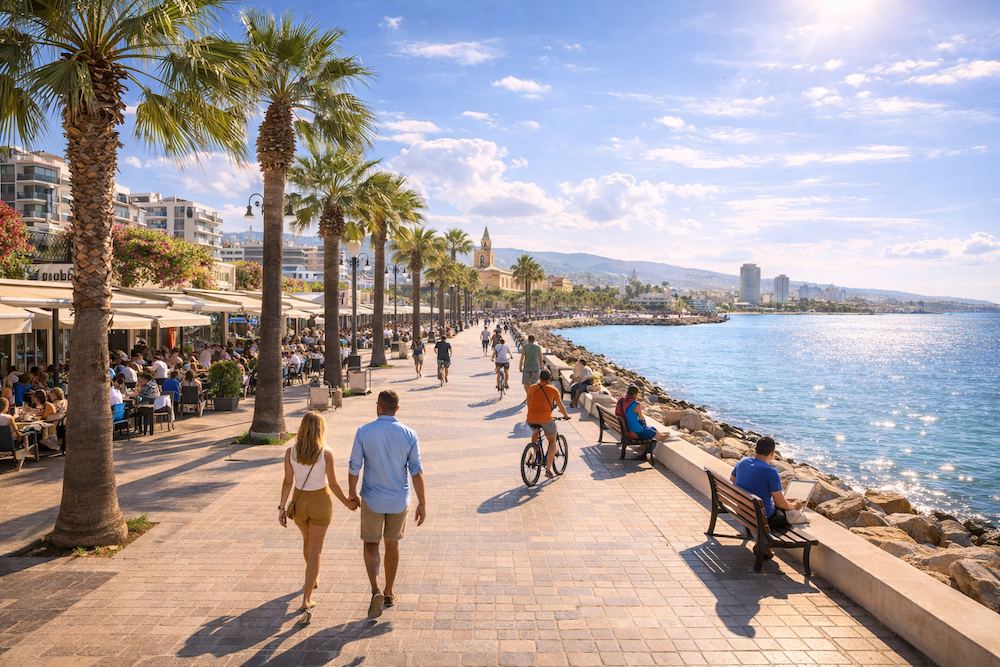
Larnaca’s famous Finikoudes promenade is the city’s pedestrian artery, connecting the main city center to Mackenzie beach and placing hundreds of shops, cafes, and restaurants within easy walking distance. This compact, integrated layout makes its real estate market somewhat undervalued. Properties here offer direct coastal access and a relaxed lifestyle without the premium price tags of Limassol. In this evolving market, I’ve witnessed clients achieve significant returns through long-term rental strategies. To understand the nuances, it’s worth exploring the broader Cyprus expat blog for direct comparisons.
Pros & Cons for the Pedestrian Investor in Larnaca
- Pros: A more affordable entry point for prime coastal property, excellent proximity to the international airport, and strong growth potential fueled by the transformative marina and port projects.
- Cons: The nightlife and dining scene are less cosmopolitan than Limassol’s, and the public transport system becomes less extensive once you move outside the city center.
#3 Paphos: The Relaxed Haven with Lifestyle Appeal
Investment & Walkability Scorecard: A Tale of Two Cities
Paphos registers a 7.5/10 walkability score, making it a tale of two distinct areas. It is particularly well-suited for retirees and lifestyle buyers seeking a relaxed pace of life. The 2026 rental yield is forecasted at 5-6.5%, with average property prices in walkable zones ranging from €150,000-€300,000, based on my analysis of local market trends.
Paphos Harbour and the Universal Area: Top Walkable Zones
In Kato Paphos (Lower Paphos), the harbour area functions as a highly walkable tourist area, where restaurants, historical sites, and beaches are all within easy walking distance. Adjacent to this is the residential ‘Universal Area,’ which extends this convenience to locals, placing many schools, clinics, and supermarkets within a 15-minute walk. This unique blend makes Paphos ideal for those who value a relaxed lifestyle, although the rental market exhibits more seasonality.
Pros & Cons for the Pedestrian Investor in Paphos
- Pros: A wonderfully relaxed pace of life, a large and supportive expat community, and significantly lower property prices for market entry.
- Cons: High seasonality can affect rental income consistency, life becomes more car-dependent outside of Kato Paphos, and public transport is almost exclusively bus-based.
#4 Nicosia: The Urban & Cultural Heart (with Caveats)
Investment & Walkability Scorecard: Life Within the Walls
Nicosia scores a 7/10 for walkability, with its strength concentrated in a specific zone. It is the best market for investors targeting year-round renters, such as students, government employees, and culture enthusiasts. The forecasted 2026 rental yield is a stable 4.5-6%, with average property prices at €150,000-€250,000 in these central zones.
The Walled City: Nicosia’s Pedestrian Paradise
Within Nicosia’s historic Venetian walls, the city transforms into a pedestrian’s paradise. This core is a maze of charming streets, independent boutiques, and atmospheric cafes, with key arteries like Ledra Street designated as car-free pedestrian zones. While the outer suburbs require transport, life within the walls offers unparalleled cultural depth and convenience. As an investment, it is an often-overlooked market for stable, non-tourist-dependent rental income.
Pros & Cons for the Pedestrian Investor in Nicosia
- Pros: A stable, year-round rental market that is not dependent on tourism, providing consistent income, and a lower cost of entry for property acquisition.
- Cons: It is the only major city that is not coastal, the summer heat can be more intense inland, and it is less attractive to short-term holiday renters seeking a beach vacation.
Walkable Cities Comparison Table (2026 Investor Forecast)
| Feature | Limassol | Larnaca | Paphos | Nicosia |
| Overall Walkability | 9/10 | 8.5/10 | 7.5/10 | 7/10 |
| Best For… | High ROI, Luxury | Value & Growth | Lifestyle & Retirees | Year-Round Rentals |
| Public Transport Score | 8/10 | 7/10 | 6/10 | 7.5/10 |
| Avg. Rent (2-Bed) | €1800-2500 | €1200-1600 | €900-1300 | €800-1100 |
| 2026 Rental Yield | 4-6% | 5-7% | 5-6.5% | 4.5-6% |
| Avg. Property Price (Walkable Zones) | €300k-500k | €200k-350k | €150k-300k | €150k-250k |
Your Practical Mobility Toolkit for Car-Free Cyprus
Guide to Cyprus Public Transport in 2026: Enhancing Car-Free Mobility
The public transport system in Cyprus has significantly improved, making car-free mobility a reality. City bus networks, operated by companies like OSEL in Nicosia and EMEL in Limassol, offer frequent routes covering all key districts. For traversing the island, Intercity buses are an affordable and reliable option, with tickets for major routes costing between €5 and €10, easily purchased via their website or app. For navigating your daily commute, I recommend using the Motion Bus app, which provides real-time updates and scheduling. This integrated system comfortably supports daily routines without the expense of car ownership.
The “Weekend Warrior” Solution: When to Use Car Hire in Your Car-Free Life
A car-free lifestyle doesn’t mean you can’t explore the island. For occasional day trips to stunning locations like the Troodos Mountains or the Akamas Peninsula, car hire is a smart and affordable solution. Rental services like Sixt or numerous trusted local providers offer vehicles starting from around €30 per day, a fraction of the cost of owning, insuring, and maintaining a car year-round. I recommend this approach for weekend explorers—it enhances your mobility and freedom without the long-term commitment.
Leveraging Micro-Mobility & Delivery Services
The final piece of the car-free puzzle is a combination of modern services. Ride-hailing with Bolt fills any immediate transport gaps, while Nextbike’s bike-sharing program is perfect for short trips, with e-bikes often available for just €1 per 30 minutes. Furthermore, delivery apps like Wolt and Foody have become ubiquitous, bringing everything from groceries to gourmet meals to your doorstep. These services effectively bridge the “last mile” gap, making a car-free living Cyprus lifestyle not just possible, but exceptionally convenient in urban areas.
Find Your Perfect Home Within Walking Distance
The difference between a good investment and a great one often comes down to intimate local knowledge. Finding the right property in these sought-after walkable neighborhoods requires more than just browsing listings—it requires understanding the unique character of each street. Our property experts Cyprus live and breathe these communities. We can help you identify a home that perfectly matches your lifestyle and investment objectives. Let our team at DOM real estate guide you to your perfect car-free home, ensuring a smooth, transparent process from search to signing. Whether you plan to buy property in Cyprus or are looking for long-term rentals, we have you covered.
Frequently Asked Questions (FAQ) for the Car-Free Resident
What is the single most pedestrian-friendly area in Cyprus for real estate investment?
For a blend of high ROI and supreme walkability, Limassol’s Molos and Old Town area currently tops the list. It offers a dynamic lifestyle with immediate access to the sea, business hubs, and leisure facilities. Properties here have shown steady appreciation, a trend backed by consistent RICS market data.
How much can I save monthly by living car-free in Limassol versus owning a car?
Based on the budgets I have reviewed with my clients, you can realistically expect to save between €200 and €300 per month. This accounts for eliminating expenses like fuel, insurance, annual road tax, and routine maintenance. These savings can substantially offset the higher rents found in prime, walkable zones.
Is public transport reliable enough for a daily work commute in 2026?
Yes, for commutes within major cities like Limassol and Nicosia, public transport is now a reliable option. The introduction of real-time tracking apps for bus services like OSEL has greatly improved punctuality, making it possible for over 80% of urban commutes to be handled without a private car.
Is a car-free life practical for a family with children in a city like Larnaca?
Absolutely. Areas like the city center and the stretch towards Mackenzie beach are exceptionally family-friendly. With schools, parks, playgrounds, and the beach all within walking distance, it is a practical and enjoyable environment for families, a fact I’ve confirmed with numerous clients who have successfully relocated there with their children.
Can I find long-term rentals in prime walkable zones easily?
Yes, but demand is consistently high. The best approach is to work with a specialized agency that has on-the-ground access to new listings. While options are plentiful if you know where to look, especially in Larnaca and Paphos, the most desirable units are often rented quickly. Exploring long term rentals Cyprus through a professional service gives you a significant advantage.