
- Securing Your Cyprus Digital Nomad Visa in 2026: A Step-by-Step Process
- Key Requirements and Income Thresholds (2026 Update)
- The Step-by-Step Application Process: From Document Gathering to Approval
- Visa Benefits, Limitations, and the Renewal Process
- The Financial Advantage: Cyprus Tax Residency & Non-Dom Status Explained
- Qualifying for the 60-Day Tax Residency Rule
- Unlocking Non-Domicile (Non-Dom) Status: Key Benefits for Nomads
- Understanding Social Insurance and GeSY (Healthcare) Contributions as a Freelancer
- Beyond the Nomad Visa: Pathways to Permanent Residency in 2026
- Digital Nomad Visa vs. Permanent Residency: A Comparison
- The Property Investment Route to Permanent Residency
- Quick Comparison: Best Cyprus Cities for Digital Nomads (2026)
- Why Limassol is the Premier Hub for Digital Nomads in 2026
- Lifestyle and Vibe: Active, Social, and Luxurious
- 2026 Projected Cost of Living: A Realistic Monthly Budget
- Work Infrastructure: Co-working, Cafes, and Internet Quality
- Deep Dive: Paphos, Larnaca & Nicosia for Remote Workers
- Paphos: For a Relaxed Pace with History and Nature
- Lifestyle, Vibe, and Expat Community
- Cost of Living and Remote Work Infrastructure
- Larnaca: The Up-and-Coming, Authentic & Affordable Choice
- Lifestyle, Vibe, and Airport Proximity
- Cost of Living and Growing Work Infrastructure
- Nicosia: The Capital for Urban Professionals & Culture
- Lifestyle, Vibe, and Business Focus
- Cost of Living and Established Urban Infrastructure
- The Cyprus Real Estate Market: A 2026 Forecast for Nomads & Investors
- Renting vs. Buying in 2026: A Financial Breakdown for Nomads
- Finding Accommodation: From Online Portals to Real Estate Experts
- Best Rental Websites and Agent Recommendations
- Understanding Rental Contracts and Tenant Rights
- Coliving in Cyprus: Modern Accommodation for the Nomad Community
- The Best Workspaces & The Thriving Nomad Community
- Top Coworking Spaces in Limassol, Paphos & Nicosia
- Networking Events and Building Your Social Circle
- Essential Setup Guide for Your First 30 Days
- High-Speed Internet in Cyprus: Staying Connected for Remote Work
- Opening a Bank Account as a Non-Resident
- Healthcare Explained: Navigating GeSY and Private Insurance Options
- Common Pitfalls and How to Avoid Them
- The “Siga Siga” Trap: Adapting to the Cypriot Pace of Life and Business
- Transportation Reality: Why a Car is Almost Non-Negotiable
- Winter in Cyprus: What to Expect When the Tourists Leave
- Final Verdict: Which Cyprus Location is Your Perfect Match?
- Choose Limassol if…
- Choose Paphos if…
- Choose Larnaca if…
- Choose Nicosia if…
- Frequently Asked Questions (FAQ) for Cyprus Digital Nomadsё
The decision to work from Cyprus offers a unique blend of a relaxed Mediterranean lifestyle with surprisingly modern infrastructure. It’s an ideal setup for any Cyprus digital nomad who wants their work environment to feel like a permanent holiday. Imagine reliable high-speed internet that handles video calls without a glitch, access to professional coworking spaces in every major city, and a sun-drenched beach just minutes away. The key benefits are compelling: a lower cost of living compared to most of Western Europe, over 300 days of sunshine a year, and seamless flight connections. I’ve watched countless freelancers and remote employees thrive here, perfectly balancing their professional duties with afternoon swims. The lifestyle for freelancers on the island truly champions work-life harmony, with mornings often spent in laptop-friendly cafes and afternoons free for socializing or exploring. As we look toward 2026, the expanding 5G network promises to make Cyprus an even more efficient and connected remote work sanctuary.
Securing Your Cyprus Digital Nomad Visa in 2026: A Step-by-Step Process
The Cyprus remote work visa is a specific type of temporary residence permit designed for non-EU citizens, allowing them to live and legally work remotely from the island for up to one year, with the possibility of renewal. This visa specifically targets individuals with a stable, provable income from clients or employers located outside of Cyprus. The core idea is to attract professionals who contribute to the local economy without competing in the local job market.
Key Requirements and Income Thresholds (2026 Update)
For 2026, the primary requirement remains a stable monthly income of at least €3,500 after taxes and deductions. This threshold increases if you plan to bring a family; for a spouse, it rises by 20% (€4,200), and for each child, it goes up by another 15%. Applicants must provide undeniable proof of remote work—such as employment contracts or service agreements with foreign companies. You cannot legally serve Cypriot clients on this visa. Other key criteria include holding comprehensive health insurance valid in Cyprus and having proof of accommodation, like a rental agreement. This year’s updates continue to emphasize faster processing through online portals.
The Step-by-Step Application Process: From Document Gathering to Approval
First, you must meticulously gather all necessary documents. This includes clear scans of your passport, contracts proving your remote income, recent bank statements showing the salary deposits, and a signed lease agreement for a Cyprus property. You’ll submit these documents through the official portal of the Civil Registry and Migration Department. After paying the €70 application fee, you will need to schedule an in-person appointment for biometrics, which can typically be done in Nicosia after you arrive. Based on my experience guiding clients through this, ensure any documents not in English or Greek are accompanied by certified translations to prevent unnecessary delays. The official approval timeline is around 5-7 weeks.
Visa Benefits, Limitations, and the Renewal Process
The main benefits of securing the Digital Nomad Visa include the right to legal residence for one year, the ability to include your immediate family on the permit, and the freedom it offers. However, it’s crucial to understand the limitations. You are strictly forbidden from undertaking any local employment. Furthermore, this visa does not provide a direct pathway to permanent residency or citizenship. To renew, you must re-submit your application before the current permit expires, again providing proof of your ongoing remote work and stable income. From what I’ve seen, nomads who keep organized records find this renewal process straightforward.
The Financial Advantage: Cyprus Tax Residency & Non-Dom Status Explained
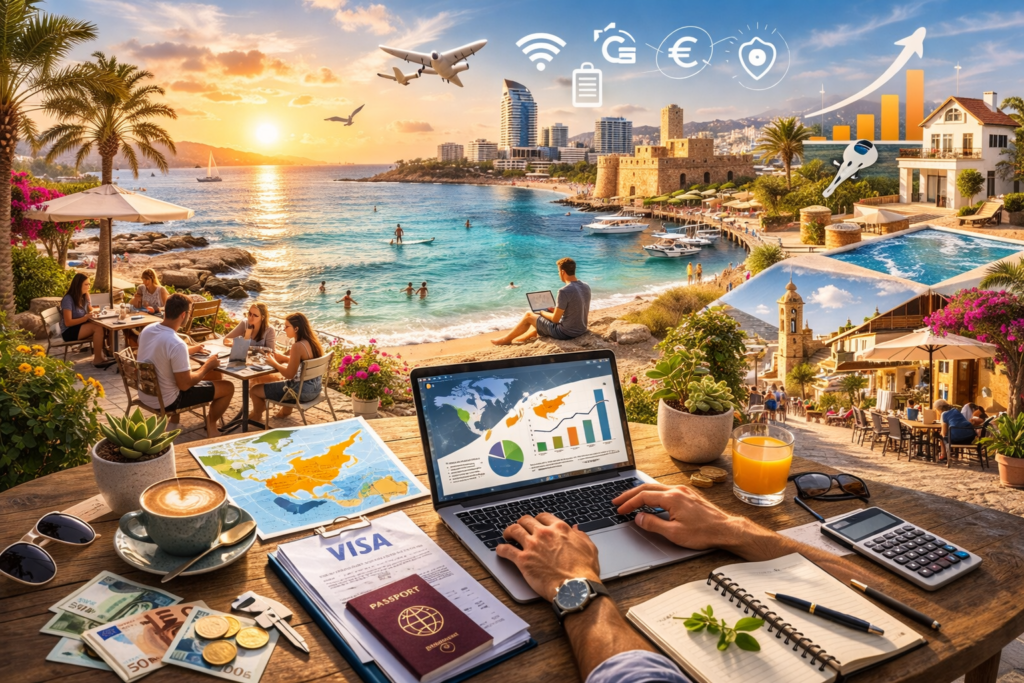
Cyprus provides a significant financial edge for remote workers through its flexible tax residency rules, especially the 60-day rule, which lets you become a tax resident and optimize your income. The most powerful tool is the non-domicile (Non-Dom) status, which can shield your worldwide dividend and interest income from Cypriot taxes for up to 17 years. As a freelancer, you will need to budget for contributions to the General Healthcare System (GeSY) at 2.65% of your income and potentially social insurance.
Qualifying for the 60-Day Tax Residency Rule
To qualify for tax residency under the 60-day rule, you must spend at least 60 days in Cyprus within a tax year, not reside in any other single country for more than 183 days, and maintain economic ties to Cyprus, such as renting a home or being a director in a Cypriot company. This rule is a game-changer for nomads who split their time between countries but want a stable, low-tax base. This status also unlocks other tax benefits, like the potential to operate through a local company taxed at a flat 12.5% corporate rate.
Unlocking Non-Domicile (Non-Dom) Status: Key Benefits for Nomads
Once you are a Cypriot tax resident, you can apply for non-domicile status. This status exempts you from the Special Defence Contribution (SDC) tax on passive income sources like dividends (17%) and interest (30%). For a freelancer or investor earning income from foreign stocks or savings, this means that income remains untaxed in Cyprus. I’ve personally advised clients who, by structuring their affairs correctly, have legally lowered their effective global tax rate to well under 5%.
Understanding Social Insurance and GeSY (Healthcare) Contributions as a Freelancer
If you register as a self-employed person in Cyprus, social insurance contributions are calculated at 15.6% on a determined portion of your income, funding your future pension and other benefits. GeSY healthcare contributions are mandatory for all residents at a rate of 2.65% of total income, granting you access to the public healthcare system. While GeSY is comprehensive, many nomads choose to supplement it with a private health plan for faster access to specialists.
Beyond the Nomad Visa: Pathways to Permanent Residency in 2026
Digital Nomad Visa vs. Permanent Residency: A Comparison
The Nomad Visa is a temporary solution for working remotely, while Permanent Residency (PR) is a long-term commitment to making Cyprus your home. Here is how they compare.
| Feature | Digital Nomad Visa | Permanent Residency |
| Minimum Stay Required | No minimum, but presence needed for application/renewal | Must visit Cyprus once every two years |
| Path to Citizenship | No direct path | Eligible to apply for citizenship after 7 years of legal residence |
| Work Rights | Remote work for foreign employers only | Full rights, including local employment and running a business |
| Property Investment | None required | Minimum €300,000 for the fast-track program |
| Renewal Frequency | Annually or every two years | One-time application, valid for life |
The Property Investment Route to Permanent Residency
Investing a minimum of €300,000 (plus VAT) in new-build real estate is the most direct route to securing permanent residency in Cyprus. This program, often referred to as the “fast-track PR,” grants you and your family an indefinite right to live on the island. My experience shows this is a popular option for nomads who fall in love with the island and decide to transition from temporary visas to a permanent base. It combines a solid lifestyle choice with a strategic asset purchase.
Quick Comparison: Best Cyprus Cities for Digital Nomads (2026)
| City | Cost of Living Index (1-5) | Internet Speed (Avg Mbps) | Nomad Community Score (1-5) | Vibe | Best For |
| Limassol | 4 | 150+ | 5 | Bustling, Cosmopolitan | Networking & Business |
| Paphos | 3 | 120 | 4 | Relaxed, Historic | Lifestyle & Community |
| Larnaca | 2 | 100 | 3 | Authentic, Budget-Friendly | Travel & Authenticity |
| Nicosia | 3 | 130 | 4 | Urban, Cultural | Business & City Life |
Why Limassol is the Premier Hub for Digital Nomads in 2026
Limassol has firmly established itself as the cosmopolitan heart of Cyprus, making it the top destination for nomads focused on business and networking. The city’s dynamic energy is palpable, from the modern skyscrapers of the business district to the lively marina. This makes Limassol for nomads the undisputed choice if you value professional connections and a vibrant social scene as much as you value sunshine.
Lifestyle and Vibe: Active, Social, and Luxurious
The lifestyle in Limassol is fast-paced and social. The nomad community here is large, well-integrated, and incredibly active, with constant tech meetups, workshops, and social gatherings. It’s a city where a business meeting can easily transition to a sunset cocktail at a rooftop bar. I’ve often joined networking events that feel more like parties, effortlessly blending professional opportunities with the island’s signature relaxed culture.
2026 Projected Cost of Living: A Realistic Monthly Budget
For a single nomad living comfortably in Limassol, a realistic monthly budget for 2026 will be between €2,500 and €3,500. This typically covers around €1,200-€1,500 for a modern one-bedroom apartment, €500 for groceries and dining out, €200 for utilities, and the rest for transport and leisure. While prices have been rising steadily, it still offers better value than comparable coastal business hubs like Barcelona or Lisbon.
Work Infrastructure: Co-working, Cafes, and Internet Quality
Limassol’s work infrastructure is top-tier. You’ll find numerous high-end coworking spaces like The Hube or Regus, offering amenities from 24/7 access to fiber optic internet with speeds exceeding 150 Mbps. The city is also dotted with stylish, laptop-friendly cafes, particularly along the seafront and in the old town, all offering reliable Wi-Fi suitable for video calls and daily tasks.
Deep Dive: Paphos, Larnaca & Nicosia for Remote Workers
Paphos: For a Relaxed Pace with History and Nature
Paphos is the ideal choice for remote workers who prefer a more relaxed pace of life, surrounded by history, nature, and a strong, supportive expatriate community.
Lifestyle, Vibe, and Expat Community
The vibe in Paphos is decidedly laid-back. The city is a UNESCO World Heritage site, and life here moves at a gentler rhythm, centered around the scenic harbor, archaeological parks, and beautiful beaches of the Akamas Peninsula. The expat and nomad community is large and tight-knit, with many social clubs and casual meetups, making it easy to build a social circle.
Cost of Living and Remote Work Infrastructure
A comfortable monthly budget in Paphos ranges from €1,800 to €2,500, making it noticeably more affordable than Limassol. Internet infrastructure is solid, with major providers like Cyta and Cablenet offering fiber packages up to 120 Mbps. While dedicated coworking spaces are fewer, many cafes like Muse Cafe Kitchen Bar offer stunning views and reliable Wi-Fi, becoming de facto workspaces.
Larnaca: The Up-and-Coming, Authentic & Affordable Choice
Larnaca is rapidly gaining traction as the smart, budget-friendly choice, offering an authentic Cypriot experience combined with ultimate travel convenience.
Lifestyle, Vibe, and Airport Proximity
Larnaca’s main draw is its authenticity and relaxed, seaside-town feel. The Finikoudes promenade is lined with palm trees and cafes, and the city retains a tangible sense of local culture. Its biggest practical advantage is proximity to Cyprus’s main international airport, just a 10-minute drive from the city center—a huge perk for frequent travelers.
Cost of Living and Growing Work Infrastructure
Larnaca is the most affordable of the coastal cities, with a monthly budget for a single nomad sitting between €1,500 and €2,200. While historically lagging in work infrastructure, it’s catching up fast. New coworking spaces are opening, and internet providers are expanding their fiber optic networks, with speeds now commonly reaching 100 Mbps.
Nicosia: The Capital for Urban Professionals & Culture
As the island’s capital and largest city, Nicosia is the hub for professionals who crave an urban environment rich in culture, history, and business opportunities.
Lifestyle, Vibe, and Business Focus
Nicosia offers a unique, energetic vibe as the only divided capital in the world. Life here is less about the beach and more about bustling commercial streets, cultural institutions, government offices, and a lively arts scene within the old city walls. It’s the administrative and financial heart of Cyprus, making it a natural fit for remote workers in finance, law, or tech.
Cost of Living and Established Urban Infrastructure
Living costs in Nicosia are moderate, generally falling between Larnaca and Limassol, with a monthly budget around €2,000-€2,800. The city boasts the most established urban infrastructure on the island. You’ll find a wide selection of coworking spaces, excellent high-speed internet (130+ Mbps is common), and a concentration of business services unavailable elsewhere.
The Cyprus Real Estate Market: A 2026 Forecast for Nomads & Investors
Renting vs. Buying in 2026: A Financial Breakdown for Nomads
The choice between renting and buying is one of the biggest financial decisions a long-term nomad will face. While renting offers flexibility, buying can be a powerful wealth-building tool, especially in a market with strong capital appreciation like Cyprus.
To put it in perspective, renting a €1,200/month apartment costs €72,000 over five years—money you will never see again. In contrast, buying a €250,000 property with a 20% down payment and a 3% mortgage could, assuming an average 6-8% annual appreciation, build significant equity. After five years, the net cost of owning could be substantially lower than renting.
Finding Accommodation: From Online Portals to Real Estate Experts
Finding the right home is crucial for a smooth transition to life in Cyprus. The process can be challenging due to high demand, but the right resources make all the difference.
Best Rental Websites and Agent Recommendations
My long-standing partners at DOM Real Estate have an extensive and verified portfolio, which protects clients from scams and saves enormous time. An experienced agent understands the nuances of each neighborhood and can negotiate terms on your behalf.
Understanding Rental Contracts and Tenant Rights
Standard rental contracts in Cyprus are for one year and typically require a one-month security deposit plus the first month’s rent upfront. Tenant rights are well-protected, but it’s vital to read your contract carefully. Pay close attention to clauses regarding utility payments, notice periods for termination, and responsibilities for maintenance. My biggest tip: always get everything in writing.
Coliving in Cyprus: Modern Accommodation for the Nomad Community
Coliving is an emerging trend in Cyprus, perfectly suited for the modern nomad. These spaces offer fully furnished, private rooms within a larger shared apartment or building, with all bills included. More than just accommodation, coliving facilities are designed to foster a built-in nomad community, with shared workspaces, social events, and networking opportunities. Spaces like Nomad Hub in Limassol or Roam in Paphos provide an instant social circle and a hassle-free living arrangement, ideal for those new to the island.
The Best Workspaces & The Thriving Nomad Community
The right workspace and a strong community are the two pillars that support a successful and enjoyable lifestyle for freelancers in Cyprus. Whether you prefer the structure of a dedicated office or the buzz of a local cafe, the island delivers.
Top Coworking Spaces in Limassol, Paphos & Nicosia
Coworking spaces have become essential hubs for the nomad community. In Limassol, spaces like Regus and The Hube offer premium facilities and 24/7 access, attracting a corporate and tech crowd. In Paphos, Hugge Coworking provides a more relaxed, community-focused vibe. Nicosia is home to established business centers and creative hubs like The Base, which cater to a diverse professional audience. These spaces are more than just a desk—they are centers for collaboration and networking.
Networking Events and Building Your Social Circle
Building your social and professional network in Cyprus is surprisingly easy. The international community is open and welcoming. I highly recommend using platforms like Meetup.com to find groups for everything from hiking and beach volleyball to tech talks and language exchange. Expat groups on Facebook are also incredibly active for organizing social events. From my own experience, attending a few tech mixers in Limassol or a casual sunset gathering in Paphos is all it takes to start building lasting connections.
Essential Setup Guide for Your First 30 Days
High-Speed Internet in Cyprus: Staying Connected for Remote Work
Getting reliable high-speed internet is a top priority. The main providers are Cyta, Cablenet, and Primetel. In major cities, fiber optic connections are widely available, offering speeds from 100 Mbps up to 1 Gbps, ensuring excellent connectivity for intensive remote work. Mobile data is also robust, with expanding 5G coverage providing a reliable backup. My advice: check the provider’s coverage for your specific address before signing a rental contract, as availability can vary by neighborhood.
Opening a Bank Account as a Non-Resident
Opening a bank account as a non-resident is a straightforward process. Major banks like Bank of Cyprus or Hellenic Bank are accustomed to working with foreign nationals. You will typically need to visit a branch in person with your passport, proof of address in Cyprus (like a utility bill or rental contract), and your visa or residence permit. The process usually takes a few hours, and you’ll walk out with an account ready for euro transactions.
Healthcare Explained: Navigating GeSY and Private Insurance Options
As a resident, you are required to contribute to and are entitled to use the national healthcare system, GeSY. It provides comprehensive coverage for a small co-payment. However, for faster access to specialists or for services not fully covered, most nomads also maintain a private health insurance policy. Companies like Cigna Global or SafetyWing offer plans specifically designed for expatriates and digital nomads.
Common Pitfalls and How to Avoid Them
The “Siga Siga” Trap: Adapting to the Cypriot Pace of Life and Business
“Siga siga” (slowly, slowly) is the unofficial motto of Cyprus. While it’s wonderful for your stress levels, it can be frustrating in business and administrative matters. My advice: plan ahead. Assume everything will take twice as long as you expect, whether it’s a government appointment or a furniture delivery. Build buffers into your deadlines and embrace the slower pace rather than fighting it.
Transportation Reality: Why a Car is Almost Non-Negotiable
While cities have bus services, public transportation between towns is limited and often inconvenient. To truly explore the island and manage daily life efficiently—from grocery shopping to weekend trips to the mountains—a car is essential. My experience is that both long-term rentals and buying a used car are viable options, and it will grant you a freedom you won’t regret.
Winter in Cyprus: What to Expect When the Tourists Leave
Many people imagine Cyprus as a place of eternal summer, but winter (December to February) is cool, rainy, and quiet. The tourist crowds disappear, which can be a huge plus. It’s the perfect time to focus on deep work in cozy cafes or explore the lush, green countryside. Just be prepared: many older apartments lack central heating, so confirm your rental has A/C units that provide heat, or be ready to use space heaters.
Final Verdict: Which Cyprus Location is Your Perfect Match?
Choose Limassol if…
You thrive on energy, prioritize business networking, and enjoy a premium, cosmopolitan lifestyle with all the amenities of a major city.
Choose Paphos if…
You want a relaxed, scenic environment with a large and welcoming expat community, where history and nature are right at your doorstep.
Choose Larnaca if…
You prioritize affordability, an authentic local atmosphere, and the convenience of being just minutes from the main international airport.
Choose Nicosia if…
Your focus is squarely on business, culture, and career growth in a bustling, non-touristy urban setting.
Frequently Asked Questions (FAQ) for Cyprus Digital Nomadsё
How much money do I need to be a digital nomad in Cyprus?
You should budget between €1,800 and €3,500 per month, depending on your chosen city and lifestyle. Larnaca is the most budget-friendly, while Limassol is the most expensive. This amount comfortably covers rent, utilities, food, and leisure.
What is the quality of the internet in Cyprus for video calls and uploads?
The quality of the internet is excellent in urban areas. Fiber optic connections from providers like Cyta and Cablenet offer average speeds of 100-200 Mbps, with packages up to 1 Gbps available, making it highly reliable for video calls, large file uploads, and streaming.
Is English widely spoken enough to live and work easily?
Yes, absolutely. English is widely spoken throughout Cyprus, particularly in business and service industries. Over 80% of Cypriots, especially the younger generation, are fluent, so you can easily manage daily life and professional interactions without knowing Greek.
How are freelancers and foreign-owned companies taxed in Cyprus?
Individual freelancers are subject to a progressive income tax rate from 0% to 35%. However, with non-domicile status, foreign dividend and interest income can be received tax-free. A Cyprus-based company is taxed at a flat, attractive rate of 12.5% on its net profits.
Can I bring my pet to Cyprus?
Yes, bringing a pet is a common and straightforward process, especially from within the EU. Your pet will need an EU pet passport (or equivalent health certificate), be microchipped, and have an up-to-date rabies vaccination. There is no quarantine requirement for pets arriving from most countries.
Is Cyprus a safe country for solo female remote workers?
Cyprus is considered one of the safest countries in Europe, with a very low crime rate. Based on the experiences of many solo female nomads I have helped relocate, they consistently report feeling safe and secure in all cities, day or night.