

Hi, I’m Oliver Bennett. I moved to Cyprus from Europe 16 years ago with my two dogs, Oscar and Milo. Since then, as a private realtor, I’ve helped hundreds of expats navigate this exact process. Moving an entire family is one thing; bringing pets along adds a layer of emotional and logistical planning. This guide is built on my firsthand experience and the latest 2026 regulations to give you a clear, stress-free path.
Relocating to this beautiful island with your furry family members is an adventure I know well. I’ve been through it myself—packing up life, finding a pet-friendly home, and settling into the unique Cyprus rhythm. This guide cuts through the complex paperwork and timelines for your 2026 move, covering key rules, costs, and practical tips to make the process smooth. Whether you are bringing pets like a dog or a cat, or a different companion, I’ll share what truly works based on real client cases and my own story.
Key Updates & Quick Checklist for 2026
For 2026, Cyprus continues to align with EU pet import rules, but we are seeing stricter enforcement on rabies titer test checks for pets arriving from non-EU origins due to global health monitoring. The single most critical factor for a successful move is your pet’s country of origin—this entirely determines the paperwork, timeline, and tests required. My best advice is to start this process as early as possible to avoid any heartbreaking delays.
Cyprus Pet Relocation Checklist
The Fundamental Rule: EU or Non-EU Origin?
Your pet’s country of origin splits the relocation process into two very distinct paths: a simpler one for EU or “listed” third countries, and a more complex and time-consuming one for all others. This distinction is crucial because Cyprus strictly adheres to EU regulations—there is no quarantine for compliant pets, but any misstep in the paperwork can lead to refusal of entry at the airport. You can check if your country is on the official EU list of ‘listed’ third countries here on the European Commission’s website.
| Requirement | EU/Listed Countries | Non-EU Unlisted Countries |
| Primary Document | EU Pet Passport | Animal Health Certificate (AHC) |
| Rabies Titer Test | No | Yes, Mandatory |
| Government Endorsement | No | Yes, Mandatory |
| Typical Timeline | 1-2 months | 4-9 months |
Path 1: Moving from an EU or ‘Listed’ Third Country
If you’re bringing a pet to Cyprus from an EU member state or a listed third country like Australia, the UAE, or Japan, the process is refreshingly straightforward. I’ve guided many families from places like Germany and, post-Brexit, the UK through this path—the key is meticulous attention to the basics to ensure a seamless entry.
Requirement 1: ISO Microchip
Your pet must have an ISO 11784/11785 compliant microchip. In my experience helping clients, this is a non-negotiable first step. I always advise having the chip scanned by your vet at every appointment leading up to the move to confirm it remains readable. A non-functional or non-ISO chip can cause serious issues at the border.
Requirement 2: Valid EU Pet Passport
For those within the EU, the pet passport is the single most important document, issued by an accredited veterinarian in your origin country. It serves as an official record of your pet’s identity, vaccination history, and health status. To facilitate pets travel to Cyprus, the passport must be currently valid and completed according to strict EU regulations. I once helped a client from Spain whose passport was set to expire mid-move; we acted quickly to get it renewed, narrowly avoiding a significant delay.
Requirement 3: Valid Rabies Vaccination
A valid rabies vaccination is mandatory. The vaccine must be administered after the microchip was implanted and at least 21 days before your travel date if it’s the primary vaccination. Subsequent boosters must be kept up-to-date to maintain validity. Cyprus port authorities check documentation for this with extreme diligence—there are no exceptions granted.
Requirement 4: Notification of Arrival (48 Hours Prior)
You must notify the Cypriot veterinary office at your planned airport of arrival at least 48 hours in advance. This is best done via email to the official addresses for Larnaca (LCA) or Paphos (PFO), the details of which are provided later in this guide.
Path 2: Moving from a Non-EU ‘Unlisted’ Country (e.g., USA, Canada, Rest of World)
For those coming from unlisted countries, which include the USA, Canada, and South Africa, the Cyprus pet import rules require several additional steps for what is termed a “non-commercial movement.” This path is significantly longer, so I always advise clients to begin planning 6-9 months ahead of their desired travel date. I’ve assisted clients from the US who nearly missed critical deadlines—your first step must be the microchip.
Step 1: ISO Microchip (Before Rabies Vaccination)
Your pet must be implanted with an ISO 11784/11785 microchip before receiving the rabies vaccination. This specific sequence is critical for ensuring the traceability and validity of the entire process. Cyprus customs officials will scan the chip upon arrival to verify its number against your paperwork.
Step 2: Rabies Vaccination & Titer Test (Min. 4 Months Before Travel)
After microchipping, your pet must receive a primary rabies vaccination. Then, at least 30 days after the vaccination date, a vet must draw a blood sample for a Rabies Antibody Titer Test (FAVN). This sample has to be sent to an EU-approved laboratory for analysis. Following a successful (passing) result, you must wait a mandatory 3-month period after the date the blood was drawn before your pet is permitted to enter Cyprus.
“The 3-month titer test wait is the number one reason I see for delayed moves. I cannot stress this enough: start this process at least 6 to 9 months before you plan to travel. Do not book any flights until your pet is officially eligible for entry based on that blood draw date.” – Oliver Bennett, Private Realtor & Cyprus Resident
Step 3: Additional Vaccinations & Treatments
Both dogs and cats require a set of core vaccines to be up-to-date (e.g., distemper, parvovirus for dogs; feline viral rhinotracheitis, calicivirus for cats). Furthermore, dogs must be treated for internal parasites (specifically Echinococcus multilocularis) by a veterinarian between 24 and 120 hours (1 to 5 days) before arrival in Cyprus.
Step 4: The EU Animal Health Certificate (AHC) & Endorsement (Within 10 Days of Arrival)
Instead of a pet passport, you will need an official EU Animal Health Certificate (AHC) issued by an accredited vet. This document is only valid for 10 days from the date of issue until arrival, so timing is critical. The completed AHC must then be endorsed by your country’s official government authority responsible for animal exports, such as the USDA APHIS for pet travel from the USA or the UK’s DEFRA/APHA for exports from Great Britain. I’ve seen clients save time and stress by pre-booking this endorsement appointment close to their departure date.
Step 5: Notifying Cypriot Authorities (48 Hours Prior)
Email the District Veterinary Office at your port of entry 48 hours before you land. For Larnaca (LCA), use vet.lca@vs.moa.gov.cy; for Paphos (PFO), use vet.pfo@vs.moa.gov.cy. Your email should include flight details and scanned copies of all your pet’s paperwork.
Cyprus-Specific Rules & Restrictions You Cannot Ignore
Beyond the general EU framework, Cyprus enforces its own specific rules. Ignoring these can result in your pet being denied entry. From my experience helping people find their dream homes here, the first question I ask is about their dog’s breed, as this can be an immediate roadblock.
Banned & Restricted Dog Breeds in Cyprus
The following dog breeds are strictly prohibited from being imported into Cyprus: Pit Bull Terrier (or any American Pit Bull), Japanese Tosa (or Tosa Inu), Dogo Argentino (or Argentinian Mastiff), and Fila Brasileiro (or Brazilian Mastiff). This ban extends to crossbreeds of these dogs. There are absolutely no exceptions, and any attempt to import them can lead to the animal being re-exported at the owner’s expense or even confiscated.
Rules for Other Pets (Beyond Dogs & Cats)
Ferrets: EU Rules Apply
Ferrets are also common pets and their travel falls under the same general EU rules as for dogs and cats: they require a microchip, a valid rabies vaccination, and either an EU pet passport or an Animal Health Certificate.
Pet Birds: Complex Health Certificates & Potential Quarantine
Bringing pet birds into Cyprus is a far more complex process. It involves a specific veterinary health certificate and, depending on the country of origin and avian flu risk, may require a period of quarantine upon arrival. You must contact the Cypriot Veterinary Services directly for guidance.
Rabbits, Rodents & Reptiles: Specific Import Permits Needed
These types of animals are not covered by the standard pet travel scheme. They require a specific import permit issued in advance by the Veterinary Services in Nicosia. While rabies tests are not needed, health checks and specific enclosure requirements are mandatory.
Budgeting Your Move: Estimated Pet Relocation Costs for 2026
The cost of moving a pet to Cyprus can vary widely depending on the country of origin, pet size, and whether you use an agent. When I help clients plan their relocation budget, the total expense for bringing pets is often a surprise, but breaking it down makes it manageable. Based on 2026 rates, you can expect the total to fall between €500 and €2,000 per pet. I helped a family from Canada budget for their two Labradors, and the vet fees were the largest variable.
| Cost Item | Estimated Amount (€) |
| Veterinary Fees (Titer Test, Health Cert) | 200 – 500 |
| Government Endorsement Fees | 50 – 150 |
| Airline Fees (In-Cabin vs. Cargo) | 100 – 400 |
| IATA-Compliant Travel Crate | 50 – 200 |
| Pet Relocation Agent Fees (Optional) | 300 – 800+ |
| Import Tax/VAT & Inspection Fee upon Arrival | 20 – 50 |
The Relocation Process: Airlines, Crates & Professional Help for 2026
A successful pet relocation to Cyprus in 2026 involves more than just paperwork; you must choose the right airline and crate. As someone who lives on the island, I always recommend planning your pets travel for the cooler months. You can learn more about finding the perfect time to move in our guides to island living and real estate.
Choosing a Pet-Friendly Airline & Booking
In-Cabin vs. Manifest Cargo: 2026 Policies
Small pets, typically those under 8kg including their carrier, are permitted to fly in the cabin on certain airlines like Aegean or British Airways. I always suggest booking these spots far in advance as they are limited. Larger pets must travel as manifest cargo, which is a temperature-controlled, pressurized hold. This is far safer and more regulated than being checked as baggage.
Heat Embargoes: Avoiding Summer Travel to Cyprus
Most airlines enforce a strict heat embargo for pets travelling as cargo to Cyprus during the summer, usually from June to September. If ground temperatures exceed 29°C (85°F), airlines will refuse to transport animals for their safety. Always aim for a spring or autumn move.
IATA-Compliant Travel Crates
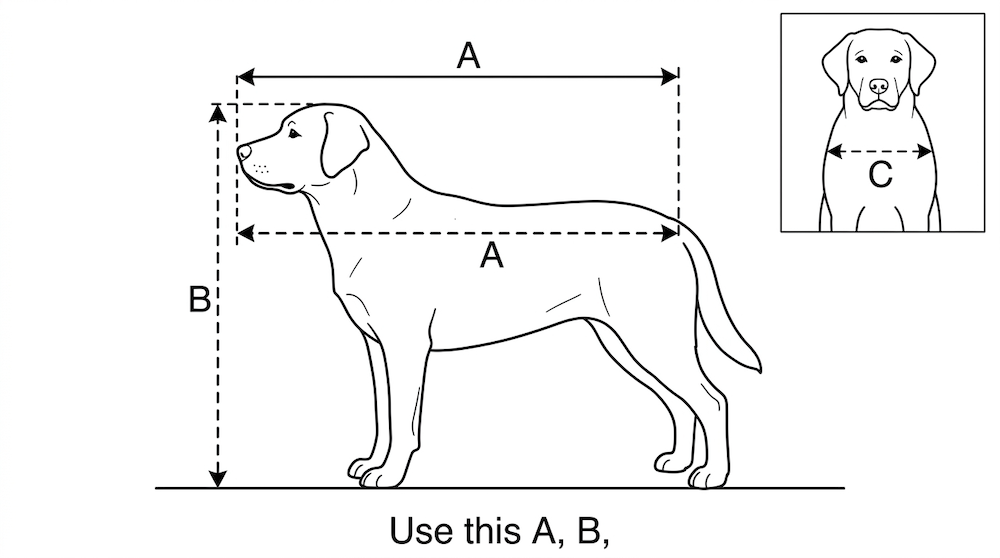
How to Correctly Measure Your Pet for a Crate
An IATA-compliant crate is mandatory for air travel. To ensure you purchase the correct size, take these measurements: Length (A: nose to base of tail), Height (B: floor to top of head while standing), and Width (C: twice the shoulder width). The crate must be large enough for your pet to stand up, turn around, and lie down comfortably. A good formula is: Length = A + 10cm, Height = B, Width = C.
Crate Acclimatization: Your Pet’s First-Class Training
The travel crate should feel like a safe den, not a punishment. I recommend introducing the crate weeks, or even months, before the flight. Start by leaving the door open with treats and toys inside, gradually increasing the time your pet spends in it with the door closed. This a small step that dramatically reduces travel stress.
DIY vs. Hiring a Professional Pet Mover
You can manage the pet relocation process yourself, and many people do, especially for straightforward EU moves. The main benefit is cost savings. However, the downside is that one small error in paperwork or timing can risk the entire move. A professional pet mover brings expertise and handles all the complex logistics.
When to Hire a Pro (Complex Itineraries, Multiple Pets, Peace of Mind)
I generally recommend hiring a professional for complex non-EU moves, long-haul flights from places like the US or Australia, or if you’re moving multiple pets. The peace of mind that comes from knowing an expert is managing every detail is often worth the investment.
Need Professional Assistance? Connect with a Pet Relocation Expert
If this process feels overwhelming, don’t hesitate to seek professional help. As a realtor who has seen countless successful (and a few stressful) family relocations, I’ve built relationships with trusted pet movers who specialize in Cyprus. They can handle everything from vet appointments to customs clearance. If you’d like a recommendation, I’m happy to connect you. [Get a Free Pet Relocation Quote] and share your origin, pet details, name, and email for tailored advice.
Arrival & Life in Cyprus: The Final Steps
What to Expect at Larnaca (LCA) or Paphos (PFO) Airport
Upon arrival, you will be directed to the airport’s veterinary inspection office to present your pet’s original paperwork. The officer will scan the microchip and verify that it matches the documents. Assuming all is in order, you’ll pay a small import fee/tax of around €20-€50. If you’ve done everything correctly, the entire process is surprisingly quick, usually taking 30-60 minutes.
Your First Month in Cyprus with Your Pet
Registering Your Dog with the Local Municipality
Within seven days of your arrival, you must register your dog with your local municipality. You’ll need to bring your dog’s passport or AHC and proof of your address in Cyprus. The annual registration fee is typically modest, around €10-€20.
Finding Pet-Friendly Housing in 2026: A Tenant’s Guide
Finding pet-friendly housing can be a challenge, but it’s far from impossible. Many landlords in Paphos and Limassol are open to tenants with pets, especially if you work with a local expert who can vouch for you. When searching for places to rent property in Cyprus, be upfront about your pets from the very beginning to save time. In my experience, offering a slightly higher security deposit can often seal the deal.
Enjoying the Island: Pet-Friendly Beaches, Parks & Cafes
Once you’re settled, Cyprus is a fantastic place to live with a pet. There are designated dog-friendly beaches like Spyros Beach near Larnaca and Glyki Nero Beach in Ayia Napa. Many parks in Limassol and Paphos are great for daily walks, and you’ll find countless cafes, especially in Nicosia’s old town, that welcome well-behaved dogs at their outdoor tables. I’ve spent many afternoons with my dogs at cafes, it’s a huge part of the lifestyle here.
Oliver’s Expert Advice: Avoiding Common & Costly Mistakes
Over 16 years, I’ve seen a few common slip-ups. Here are the top three mistakes to avoid.
Mistake #1: Miscalculating the Rabies Titer Test Timeline
The 3-month waiting period after the blood draw is non-negotiable. Don’t just count three months from the test date; plan for potential lab delays and start the entire process at least six months before you hope to travel.
Mistake #2: Arriving on a Weekend or Public Holiday
The airport veterinary services offices operate on a standard weekday schedule. If your flight lands on a Saturday, Sunday, or a Cypriot public holiday, you may face significant delays or complications in getting your pet cleared. Always schedule a mid-week arrival.
Mistake #3: Using a Non-Compliant Microchip
Stick to the ISO 11784/11785 standard. While some older chip types can be read with a special scanner, you are responsible for providing one. It’s much safer and simpler to ensure the ISO-compliant chip is implanted from the start to avoid any chance of a scan failing at customs.
Frequently Asked Questions (FAQ) for 2026 Relocation
Can I move to Northern Cyprus with my pet?
Moving a pet to Northern Cyprus involves entirely different regulations, as it is not part of the EU. Its rules are set by the local authorities there and can be more complex, often requiring import permits and sometimes quarantine. EU pet travel rules do not apply.
How does Brexit affect moving my pet from the UK to Cyprus?
Since Brexit, Great Britain (England, Scotland, Wales) is a ‘Part 2 listed’ third country. This means when bringing pets from the UK to Cyprus, you can no longer use a UK-issued EU pet passport. You must obtain an Animal Health Certificate (AHC) for each trip. The good news is a rabies titer test is not required.
Is a Titer Test needed if I am coming from an EU or ‘listed’ country?
No. The rabies antibody titer test is only required for pets originating from unlisted non-EU countries. For travel from an EU or listed country, a valid rabies vaccination documented in the EU pet passport or AHC is sufficient.
What are the rules for bringing more than 5 pets (commercial movement)?
Bringing more than five pets is generally considered a commercial movement, even if they are your personal pets. This process is far more complex, requiring additional health certificates, TRACES registration, and potentially different tax implications. You must contact the Cypriot Veterinary Services for guidance well in advance.
Does quarantine still exist for pets entering Cyprus?
For non-commercial movements of cats, dogs, or ferrets that fully comply with the EU import regulations for their country of origin, there is no mandatory quarantine upon arrival in Cyprus. Quarantine may only be imposed if there are issues with paperwork, microchip, or the animal’s health.
How does transiting through a non-EU country affect my pet’s entry from an EU country?
If you are travelling from one EU country to another but transit through a non-EU country, your pet’s EU status is maintained as long as it remains in a secure area of the airport or aircraft and the paperwork is in order. However, to avoid any potential complications, direct travel is always the safest option.