
By Oliver Bennett, a 16-year Cyprus resident and relocation expert.
Why Cyprus is a Premier Retirement & Relocation Destination
The Property Market Advantage: Investing in Your Retirement
Cyprus presents a unique opportunity for retirees to purchase properties that are not just homes but also sound investments for funding future senior care Cyprus needs. In 2026, we’re seeing average villa prices in the popular Paphos district starting around €250,000, with potential rental yields reaching up to 5% annually. From my experience, this isn’t just a number on a page. I helped a UK couple in 2024 secure a two-bedroom apartment in Larnaca for €180,000; by early 2026, its market value had appreciated by 15%, driven by consistent demand from the expat community. This stable growth is underpinned by the country’s EU membership, which provides market security. For retirees, owning a property means building equity without the burden of high maintenance, as many modern developments include community fees that cover landscaping and pool care. When you compare this to renting, where costs inevitably rise with inflation, the benefits become clear. A smart property investment can essentially fund your future elderly care services. You can explore the types of properties available with trusted partners like the real estate agency DOM in Cyprus.
The Unbeatable Lifestyle: Climate, Safety, and Expat Community
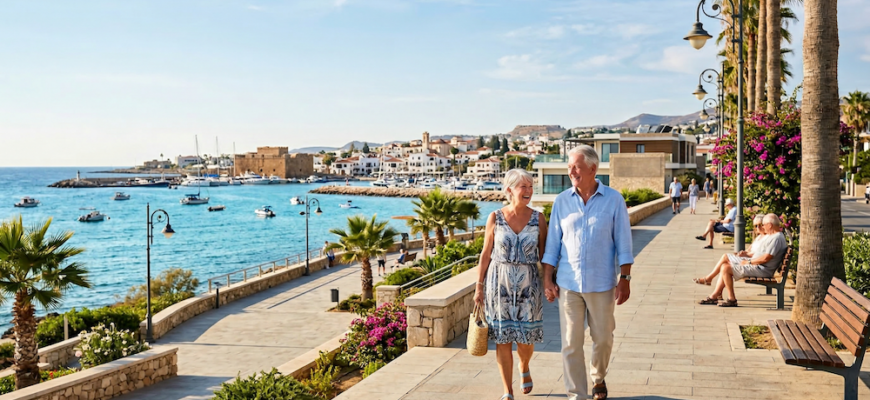
With an incredible 340 sunny days per year, Cyprus enables a lifestyle where seniors can enjoy outdoor activities like walking, swimming, and gardening almost year-round, without the harsh winter chills common in Northern Europe. This amazing climate has a direct positive impact on health and well-being. Safety is another major draw—official Eurostat data consistently places Cyprus among the safest EU member states, with crime rates roughly 40% below the European average. Beyond the statistics, there’s a thriving expat community, particularly in Paphos, where British, German, and Scandinavian retirees have established lively social circles, golf clubs, and walking groups. When I relocated here myself back in 2010, I found the integration process surprisingly smooth, and my clients consistently mention how this welcoming atmosphere eases their transition. In most coastal towns, there are no significant language barriers, and the abundance of fresh, locally grown Mediterranean produce supports a healthy and active approach to aging.
The Legal Framework for Retirees: Visas and Permanent Residency Simplified
For retirees hailing from non-EU countries, navigating the residency process is more straightforward than you might think. Many opt for the Category F Permanent Residency permit, which is ideal for those with a stable foreign income. To qualify, an applicant must demonstrate an annual income of at least €10,000 from abroad and typically own a property worth around €300,000. In my experience guiding clients through this, the process usually takes between 6 and 12 months. EU citizens, of course, benefit from the freedom of movement and can establish residency right away. I’ve guided dozens of families through this—as recently as 2025, a client secured their permit swiftly by investing in a property in Limassol. The permit has no age restrictions and can include dependent family members, providing peace of mind. For official forms and the latest requirements, it’s always best to check directly with the Civil Registry and Migration Department of Cyprus.
The Shift in Senior Care: Market Forecast & Trends for 2026
“Based on my 16+ years here, the 2026 market for senior care Cyprus is shifting decisively towards ‘lifestyle’ retirement communities that expertly blend independence with optional, on-site services care. We’re seeing more forward-thinking developments that cater specifically to the active North European and UK retiree who wants community, not just a room.”
– Oliver Bennett, Cyprus Relocation Expert
Comparing the Main Types of Elderly Care Available
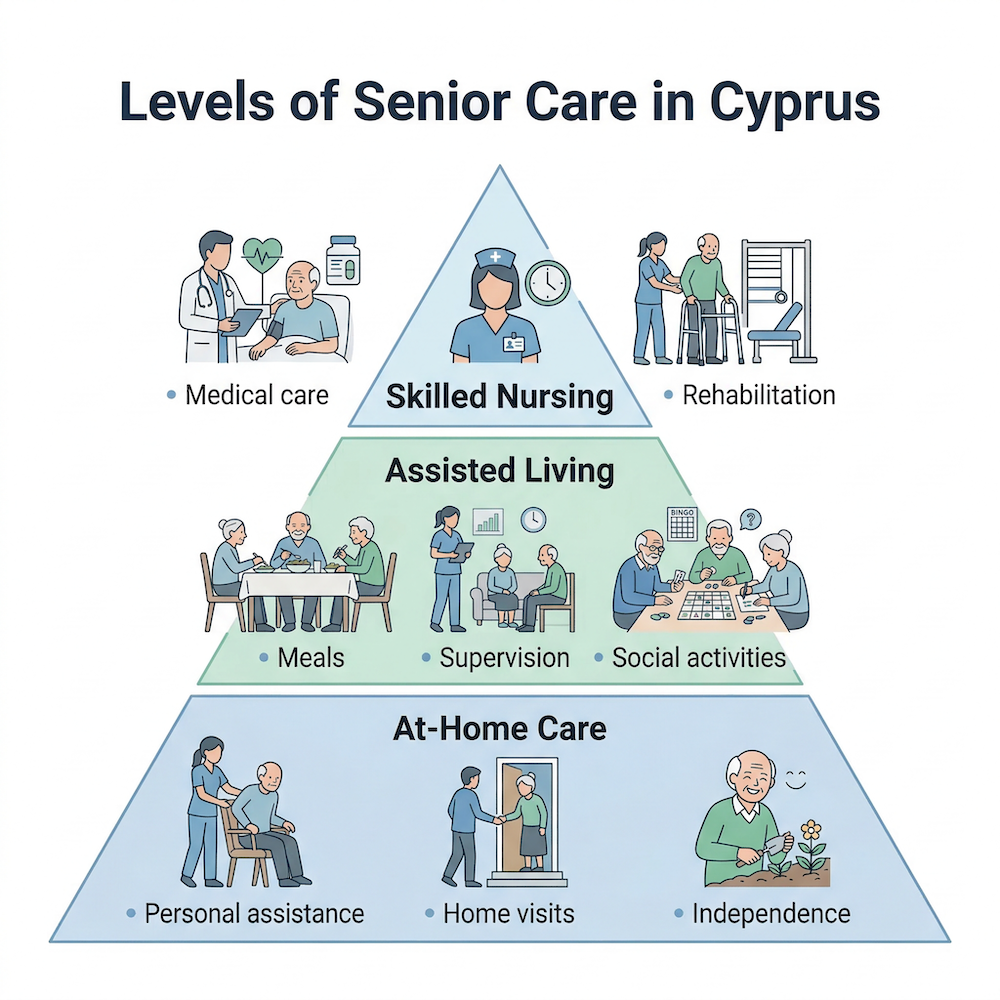
For Active & Independent Seniors
Independent Living & Retirement Villages
These specialized communities are perfectly suited for seniors who are fully capable of managing their daily lives but desire the social benefits and conveniences of a managed environment. In Cyprus, you’ll find several such villages, particularly around Paphos, offering modern villas or apartments with access to shared facilities like swimming pools, clubhouses, and organized events. Monthly fees typically range from €500 to €1,000, which covers property maintenance, gardening, and security. A client of mine moved into one in 2023 and described it as “the best of both worlds”—she has her own private space but can opt into community dinners or group excursions whenever she wishes. It’s an ideal setup for those looking to avoid social isolation while enjoying a hassle-free lifestyle.
At-Home Care Services (In-Home Support)
For seniors who prefer to age in place within their own homes, home care provides personalized support tailored to their specific needs. This can range from assistance with daily chores, meal preparation, and medication reminders to more personal care. Agencies across Cyprus typically charge between €15 and €25 per hour, and care plans are highly customizable, from just a few hours a week to 10 hours a day. This flexibility is perfect for expats living in their own purchased or rented apartments. I recently connected a family in Limassol with a reputable provider that arranged an excellent English-speaking caregiver, allowing their father to maintain his independence and privacy in familiar surroundings. This form of elderly care is a popular choice for property owners who are deeply connected to their homes.
For Those Needing Daily Support
Assisted Living Facilities (Στέγες Ηλικιωμένων)
Assisted living Cyprus facilities bridge the gap between independent living and full medical care. They provide private or semi-private rooms and offer support with daily activities such as bathing, dressing, medication management, and mobility. Here in Cyprus, these facilities, known locally as Stéges Ilikioménon, strongly emphasize communal living with 24/7 non-medical staff available to assist residents. You can expect amenities like private en-suite bathrooms, beautifully maintained gardens, and organized social programs. A 2025 study released by the Cyprus Ministry of Health highlighted that there are over 50 registered assisted living sites on the island, with the majority concentrated in major urban areas like Nicosia, Limassol, and Larnaca.
What to Expect: A Day in a Cyprus Assisted Living Community
A typical day in a Cyprus assisted living community is structured to promote both well-being and social engagement. Mornings often begin with a communal breakfast, followed by light physical activity such as chair yoga or a guided walk in the garden. Afternoons are usually dedicated to hobbies, crafts, or organized outings to a local café or the seaside. Evenings feature a shared dinner and relaxed social time, perhaps watching a film together. Staff-to-resident ratios are generally around 1-to-5 during daytime hours, ensuring attentive care. I visited a facility in Larnaca last year—the residents I spoke with praised the stunning sea views from the common areas and the constant availability of a nurse for minor health queries, striking a perfect balance between supportive elderly care and personal freedom.
For Seniors with Significant Medical Needs
Skilled Nursing Facilities / Nursing Homes (Γηροκομεία)
These facilities, often called Girokomeía, are designed for individuals with complex medical conditions or those requiring post-surgery rehabilitation. Licensed and regulated by the Cypriot government, they provide 24/7 skilled nursing care administered by registered nurses and medical staff. The cost for a bed in a private nursing home typically ranges from €2,000 to €4,000 per month. In my experience, the Paphos district is home to some of the top-rated facilities, many of which feature comprehensive physiotherapy and rehabilitation programs designed to help residents regain mobility and independence.
Specialized Memory Care for Dementia & Alzheimer’s
Many nursing homes in Cyprus now feature dedicated memory care units designed to provide a safe and supportive environment for individuals living with dementia or Alzheimer’s. These units incorporate enhanced safety features like secured exits and courtyards, along with specialized activities that aim to stimulate cognitive function and reduce agitation. Common therapies include music therapy, art therapy, and reminiscence sessions. A 2026 forecast from Alzheimer’s Europe projects a rising demand for these services care across the EU, and facilities in Limassol are already integrating modern technology, such as GPS tracking bracelets, to ensure resident safety and provide families with peace of mind.
Respite & Palliative Care Options
Respite care offers a vital service for families by providing short-term stays for seniors, giving primary caregivers a much-needed break. These stays can range from a few days to several weeks, with costs starting from around €100 per day. Palliative care, conversely, focuses on providing comfort and easing end-of-life symptoms for individuals with serious illnesses. This compassionate care can be delivered at home or within a dedicated facility. For Cypriot citizens and long-term residents with low incomes, government subsidies may be available to help cover a portion of these essential services care costs.
Estimated Costs for Senior Care & Real Estate: 2026 Outlook
Understanding the financial landscape is a critical step in planning for retirement and potential elderly care services in Cyprus. Below is a realistic projection of monthly costs you can expect in 2026, helping you compare the main options side-by-side.
Table: 2026 Projected Monthly Cost Comparison of Senior Care Options
| Care Type | Private Facility Avg. Monthly Fee (€) | Public Facility Avg. Monthly Fee (€) | Key Services Included |
| In-Home Care (per hour) | €15-€25 | N/A | Companionship, meals, light housekeeping, medication reminders |
| Assisted Living | €1,500-€3,000 | €800-€1,500 | Room, all meals, daily assistance, social activities, 24/7 staff |
| Nursing Home | €2,500-€5,000 | €1,000-€2,500 | Full medical care, physical therapy, 24/7 skilled nursing supervision |
Source: Projections based on 2025 Cyprus Ministry of Health data, cross-referenced with private provider rates and adjusted for projected 2026 inflation.
Property Investment for Retirement: Buying vs. Renting in 2026
Choosing whether to buy or rent has significant long-term implications. Buying a property builds equity; for instance, a €200,000 apartment in a desirable area can currently generate around €800 in monthly rental income, a revenue stream that can directly offset future care costs. Renting, while offering flexibility, provides no asset accumulation, with typical two-bedroom apartment costs starting at €700 per month and rising. Critically for non-EU citizens, property ownership is a key component of the permanent residency application. Analyzing your options for real estate investment in Cyprus can reveal high-yield assets that secure both your home and financial future.
Financial Breakdown: Understanding VAT, Title Deeds, and Other Property Costs
When purchasing property, it’s essential to budget for more than just the sticker price. A reduced VAT rate of 5% applies to the first 200 square meters of a primary residence for first-time buyers, which is a significant saving. Be prepared for title deed issuance to take 1-2 years, although this doesn’t prevent you from living in or renting out the property. Property transfer fees are calculated on a sliding scale from 3% to 8% based on the property’s value. With smart negotiation, you can find savings—one of my clients in 2025 successfully negotiated a price reduction that saved them over €5,000 on these fees alone.
Financing and Subsidies
Understanding What’s Included (and What’s Not) in Care Fees
When you receive a monthly fee from a care facility, it’s crucial to read the fine print. Standard fees almost always cover lodging, meals, and basic assistance. However, extra services such as specialized physical therapy, certain medical supplies, or private excursions can add an extra €200-€500 per month. Always request a detailed breakdown and review the contract carefully to avoid any unexpected or hidden costs down the line.
Potential Government Subsidies and Eligibility Criteria
The national healthcare system, GESY, can provide subsidies for certain medical aspects of care for eligible residents. In some cases, low-income residents may receive subsidies of up to 50% for care in public facilities. Eligibility generally requires established Cyprus residency (like a permanent residency permit) and a declared annual income below a certain threshold, typically around €20,000. It’s a benefit that expats can often qualify for after they have officially made Cyprus their home.
5 Steps to Choosing a Trusted Senior Care Provider in Cyprus
Step 1: Assess Your or Your Loved One’s Needs (Medical & Lifestyle Checklist)
Before you start looking, create a clear list of must-haves versus nice-to-haves. This simple step prevents you from getting overwhelmed by options. Use a practical checklist:
✅ Level of daily help required (bathing, dressing, etc.)?
✅ Specific medical needs (e.g., diabetes management, mobility support)?
✅ Preferred location (near family, city, or quiet village)?
✅ Social preferences (active community vs. quiet environment)?
Step 2: Research & Shortlist Facilities (Key Criteria: Location, Staffing, Services)
With your needs checklist in hand, begin your research. Focus on key criteria that indicate quality senior care Cyprus providers. Pay close attention to staff-to-resident ratios (a ratio of 1:6 or better is a good benchmark), the availability of specialized services like physiotherapy or memory care, and the facility’s proximity to a reputable hospital. Use online directories, expat forums, and recommendations to create a shortlist of 3-5 promising facilities to investigate further.
Step 3: Conduct In-Person & Virtual Tours (What to Look For & Ask)
There is no substitute for seeing a facility for yourself. During a tour, observe the general atmosphere: are residents engaged and happy? Is the facility clean and well-maintained? Ask direct questions about emergency protocols, staff training and turnover rates, and how they handle resident feedback or complaints. For those planning from abroad, many facilities now offer high-quality virtual tours, which are an excellent way to get a preliminary feel for the place.
Step 4: Verify Licensing, Reputation, and Reviews
Ensure any facility on your shortlist is fully licensed by the Cyprus Ministry of Health or the Ministry of Social Welfare. This is non-negotiable. After that, dig into their reputation. Read recent Google and Facebook reviews, but also ask the facility for references from current residents or their families. A reputable provider will have no problem connecting you. From my experience helping clients with this, I always double-check the licensing status as a first step.
Step 5: Review Contracts & Understand the Admission Process
The final step is a thorough review of the legal agreement. The contract should clearly detail all fees, the scope of services provided, policies on fee increases, and the termination process. The admission process itself typically involves a comprehensive medical and needs assessment by the facility’s staff, which can take anywhere from one to four weeks to complete before a move-in date is confirmed.
Your 2026 Relocation Plan: A Step-by-Step Guide for Expats
Step 1: The Residency Application (Permanent Residency vs. Category F Visa)
The first official step is securing your legal right to live here. As mentioned, non-EU citizens often apply for the Category F visa, which grants permanent residency based on proof of foreign income and property ownership. It’s designed for individuals who do not intend to work in Cyprus. You can find detailed requirements and application forms directly on the official website of the Civil Registry and Migration Department.
Step 2: Finding and Securing the Right Retirement Property
Once you have a handle on residency, the search for your perfect home begins. It’s wise to explore different districts to find the one that fits your lifestyle. When you find a property, the process typically involves placing a 10% deposit to secure it, followed by the signing of contracts. Let’s be honest, using a trusted local agent can make all the difference, as they can often find deals and navigate local procedures far more effectively.
Best Areas in Cyprus for Retirees: Paphos, Limassol, and Larnaca Districts Compared
- Paphos: The undisputed favorite for British and Northern European expats. It offers a relaxed, coastal lifestyle with more affordable property prices (around €1,500/sq m). The community is incredibly active, and it boasts a high concentration of excellent elderly care services.
- Limassol: For those who prefer a more cosmopolitan, urban vibe, Limassol is the bustling heart of Cyprus. It’s pricier (averaging €3,000/sq m), but offers high-end amenities, a vibrant marina, and a dynamic cultural scene.
- Larnaca: A great middle-ground option. It’s quieter than Limassol but has a beautiful seafront promenade and is more traditionally Cypriot. Prices are mid-range (around €2,000/sq m), and its international airport makes travel easy.
Step 3: Arranging Healthcare and Long-Term Care
After securing residency, you can enroll in GESY, the public healthcare system. This is a crucial step for managing long-term health needs and should be a priority upon arrival.
Navigating GESY (Public Healthcare) vs. Private Health Insurance
GESY provides comprehensive healthcare coverage for Cyprus residents, often with minimal co-payments for doctor visits and prescriptions. It’s an excellent system. However, many expats choose to supplement it with private health insurance (costing around €500-€1,000 per year) to gain faster access to specialists and private hospitals, ensuring no waiting times for non-urgent procedures.
The Importance of a Cypriot Power of Attorney
This is a piece of advice I give to all my clients: arrange a Cypriot Power of Attorney. This simple legal document, which costs between €200-€500 to set up, is invaluable. It authorizes a trusted family member or friend to manage your financial and legal affairs if you become unable to do so yourself. For expats, having this in place locally avoids complex international legal issues during a time of crisis.
Finding a Home Near Cyprus’s Best Care Facilities?
Let me leverage my 16 years of on-the-ground experience to find you the perfect retirement property, located minutes from top-rated care facilities. Get a free, no-obligation consultation.
Frequently Asked Questions about Senior Living & Relocation in Cyprus
What’s the main difference between assisted living and a nursing home in Cyprus?
The primary difference lies in the level of care provided. Assisted living is for seniors who need help with daily activities (like meals and dressing) but are otherwise largely independent. A nursing home provides 24/7 skilled nursing care for individuals with significant medical conditions that require constant medical supervision.
Are there English-speaking care facilities and expat-friendly communities?
Absolutely. In areas with large expat populations like Paphos, Limassol, and the surrounding villages, a majority of private senior care facilities have English-speaking staff. These communities are well-accustomed to catering to the needs and cultural preferences of UK and Northern European retirees.
How does Cyprus’s GESY healthcare system integrate with senior care facilities?
GESY covers the medical needs of residents, not their living costs. This means that if you live in a care facility, GESY will cover your doctor’s visits, prescribed medications, and hospital treatments, just as it would if you were living in your own home. Facilities typically coordinate with local GESY doctors for regular on-site visits or transport residents to appointments.
Can I bring my elderly parents to live with me in Cyprus on my visa?
Yes, this is possible through a family reunification application, but it depends on your own residency status. If you hold a permanent residency permit, you can apply to have dependent elderly parents join you. They will typically need to demonstrate that you are their primary financial support.
How does buying property in Cyprus work for non-EU citizens?
Non-EU citizens can freely purchase one property in Cyprus (an apartment, house, or a plot of land). The process is straightforward and transparent, and property ownership is a significant factor in a successful permanent residency application. For expert guidance on the process, you can consult with proven professionals at a leading Cyprus real estate agency.
Can couples with different care needs live together in the same facility?
Yes, many modern facilities are designed to accommodate this exact scenario. They often offer a campus-style environment where one partner might live in an independent or assisted living wing while the other resides in the skilled nursing care section, allowing them to remain close and see each other daily.