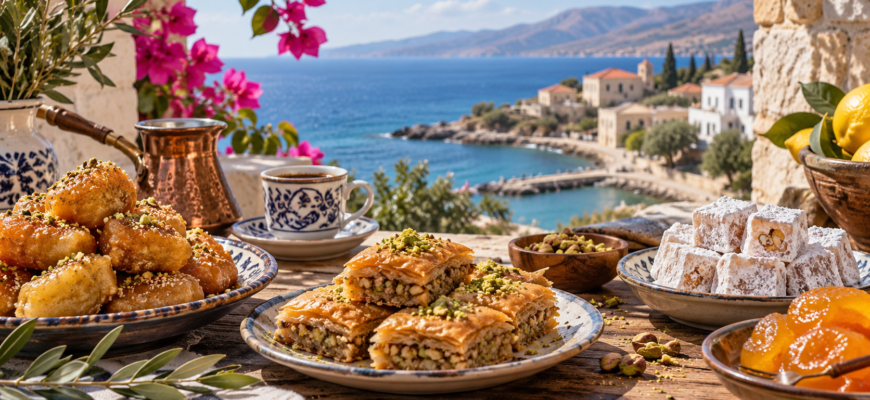
I arrived in Cyprus in 2010 thinking I would stay a month. Sixteen years later, the island’s unique sweets still manage to surprise me. The world of traditional desserts Cyprus offers is not just about a treat after a meal; it’s a deep dive into the island’s soul. This part of Cyprus food culture carries centuries of Greek, Ottoman, and Levantine influences, marking every family celebration, village festival, and coffee-house conversation with a distinct, sweet signature.
What Makes Cypriot Desserts Distinct
Cypriot desserts rely on simple, hyper-local ingredients: sun-dried almonds, walnuts, fine semolina, and fragrant carob or thyme honey. Rosewater and mastic, a resin from the island’s own trees, add an unmistakable aroma. A key difference from mainland Greek or Turkish versions is the more restrained use of sugar syrup; the focus has been on letting the nut and spice flavours truly stand out. Most of these recipes have remained unchanged for generations, passed down within families, which is why the taste is so authentic and homemade, not mass-produced.
Core Desserts You Should Know
- Loukoumades – Small, golden-fried dough balls, light and airy on the inside, soaked in honey syrup and sprinkled with cinnamon and crushed walnuts. You’ll find these irresistible puffs at nearly every street festival and local fair.
- Shamishi – A fried pastry parcel with a crispy, delicate shell, filled with a warm, creamy semolina pudding flavoured with mastic. It is then dusted with icing sugar. A Limassol speciality, best eaten hot from the paper bags they’re sold in.
- Soutzoukos – A quintessential item of traditional food Cyprus, these are strings of almonds or walnuts dipped repeatedly in thickened grape must (palouzes) and left to dry into a chewy, firm sweet. Look for the deep burgundy colour; paler versions are often undercooked and lack flavour.
- Koupes – While savory koupes with spiced minced meat are common, the sweet version is a rare delight. It replaces the meat with a filling of cinnamon and raisin rice pudding inside the crispy bulgur wheat shell. Definitely worth seeking out for an unusual treat.
- Mahallebi – A refreshing, chilled milk pudding thickened with rice flour or cornstarch, often served in summer. It is topped with a fragrant orange-blossom or rosewater syrup and a scattering of crushed pistachios for texture. A popular staple in Paphos cafés.
- Pastelli – A simple yet satisfying bar made from sesame seeds and honey, often with added peanuts or almonds. The best ones use only local Cypriot sesame and thyme honey, making them a fantastic, high-energy snack sold at harvest fairs and kiosks.
Where to Taste Them Authentically
In Limassol Old Town, the small, unassuming bakery opposite the Carob Museum has served the same shamishi recipe since the 1960s. My advice: order at the counter and eat them standing outside on the pavement while they are still piping hot for the full, authentic experience.
Paphos harbour has a couple of family-run tavernas that wisely keep loukoumades on their menu year-round, not just during festivals. For a taste closer to the original, ask for them with less syrup (“ligo siropi”) to let the flavour of the dough shine through.
Nicosia’s covered market, located within the historic city walls, offers the widest selection of soutzoukos. Here, you’ll find village producers who come in weekly to sell their wares. Prices are clearly posted, so bargaining is not part of the culture here.
For a memorable sit-down experience, visit the village of Kakopetria in the Troodos mountains. It holds a chestnut festival each October where you can try mahallebi made with local honey instead of sugar syrup, a delicious and unique variation.
Practical Tips from Sixteen Years on the Island
Most traditional sweets are best eaten the same day they are prepared, as they contain no preservatives and their textures are at their peak. If you buy packaged soutzoukos to take home as a souvenir, my experience shows that the thinner strands tend to keep their satisfyingly chewy texture longer. While many modern cafés now list allergens on their menus, smaller village spots may not. Don’t hesitate to ask simply—”me fistikia?” if you need to avoid pistachios, or “me karidia?” for walnuts. The owners are almost always happy to clarify.
I once took a family from Sweden to that little Limassol bakery for their first taste of shamishi. The children were expecting something like a cake; they left excitedly asking where they could buy the ingredients to try making them back home. That is the usual reaction I see. These desserts travel exceptionally well in memory, even when the detailed recipe does not.
If you are planning to spend more time on the island, learning about these sweets and where to find them is one of the quickest ways to feel at home. The same districts that offer the best desserts are also the ones where people actually live their daily lives—something worth remembering whether you are here for a holiday or considering a longer stay. Discovering these authentic areas is a fantastic way to understand the local rhythm, and my Cyprus Life & Real Estate Blog is filled with similar insights to help you explore the island beyond the usual tourist trails.