
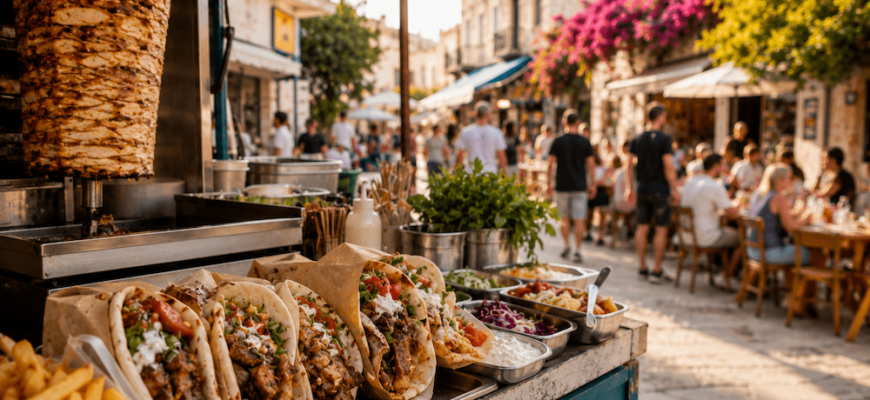
- The Top 5 Unmissable Cyprus Street Foods: A Quick Visual Guide
- The Complete Cyprus Street Food Pantheon: Savoury & Sweet
- Savoury Classics: The Heart of Cypriot Street Cuisine
- Souvlaki & Sheftalia: The Undisputed Kings in Pitta
- Gyros: The Cypriot Style Explained
- Koupes, Pourekia & Lahmajoun: The Perfect Handheld Snacks
- Halloumi & Lountza in Pitta: The Ultimate Grilled Sandwich
- Sweet Endings: Must-Try Street Desserts
- Loukoumades: Honey-Drenched Doughnut Perfection
- Pishies & Other Fried Doughs
- Kalampoki Psito: Grilled Corn on the Cob
- Oliver’s 2026 Street Food Map: Finding the Best Bites Island-Wide
- Nicosia (Lefkosia): The Capital’s Culinary Crossroads
- Limassol (Lemesos): Cosmopolitan & Coastal Flavours
- Larnaca (Larnaka): Finikoudes Favourites & Beyond
- Paphos (Pafos): Navigating Tourist Hotspots for Authentic Food
- Ayia Napa & Protaras: Quality Eats Beyond the Party Scene
- How to Order & Eat Like a Local: Insider’s Guide
- The Language of the Grill: Essential Phrases & Ordering Tips
- Spotting Authenticity: 5 Telltale Signs of a Great Stall vs. a Tourist Trap
- The Rhythm of Eating: When the Best Places Open, Peak, and Sell Out
- The “Panigiri” (Local Fair): A Street Food Spectacle
- Perfect Pairings: What to Drink with Your Cypriot Street Food
- Local Beers: KEO vs. Leon
- Traditional Spirits & Wine: Zivania & Local Village Wine
- Non-Alcoholic Refreshments: Frappé, Ayran, & Triantafyllo
- The Future of Cyprus Street Food (2026 Outlook)
- Price Guide 2026: What to Budget for Street Food
- Plant-Based Cyprus: Finding Vegan & Vegetarian Street Food Options
- Emerging Trends: Gourmet Food Trucks & Fusion Cuisine
- Frequently Asked Questions (FAQ)
I moved to Cyprus in 2010 expecting a short, sun-drenched chapter and, sixteen years later, I’m still here, having built a life on this incredible island. My love affair with Cyprus began on the streets, chasing the intoxicating smell of charcoal and grilled meat down winding side alleys, a habit I still haven’t kicked. The authentic cyprus food you find at these humble stalls remains one of the quickest and most delicious ways to tap into the real rhythm of the island, a world away from the tourist brochures. It’s a direct line to the island’s heart.
The Top 5 Unmissable Cyprus Street Foods: A Quick Visual Guide
These five items are the bedrock of the local street food scene, turning up at almost every decent stall. Master this list, and you’ll eat like a king from Paphos to Nicosia without ever needing to decipher a printed menu.
The Complete Cyprus Street Food Pantheon: Savoury & Sweet
Savoury Classics: The Heart of Cypriot Street Cuisine
Souvlaki & Sheftalia: The Undisputed Kings in Pitta
A proper Cypriot souvlaki uses tender chunks of pork or chicken, marinated overnight in olive oil, lemon, and oregano, then skewered and grilled over charcoal. Sheftalia are its richer, more decadent cousins: spiced, herby pork or lamb mince sausages wrapped in caul fat that melts and crisps as it cooks. Most locals, including myself, order the “mix”—both meats nestled together in one glorious pitta. A proper serving is loaded with fresh tomato, cucumber, white onion, and chopped parsley, finished with a generous spoonful of tzatziki (yoghurt-cucumber dip) or tahini. This is the cornerstone of traditional food cyprus.
Gyros: The Cypriot Style Explained
Cypriot gyros consists of thin, succulent slices of pork, stacked and roasted on a vertical rotisserie, seasoned simply but perfectly with salt, pepper, and oregano. The primary difference from the Greek version is twofold: we use a unique, thicker Cypriot pitta bread that forms a pocket, and we generally skip the heavy yoghurt sauce, letting the flavour of the meat shine. To get the authentic local experience, simply ask for “pork gyros.” The vendor will know exactly what you mean. The resulting food in cyprus is a masterpiece of texture and flavour.
Koupes, Pourekia & Lahmajoun: The Perfect Handheld Snacks
These are the snacks you grab on the go, often found in bakeries and dedicated street-side windows. Each has its own distinct character, satisfying different cravings.
| Name | Main Filling | Pastry Type | Typical Flavour Profile |
| Koupes | Minced meat, onion, parsley & bulgur | Bulgur wheat crust | Earthy, spiced, with a satisfyingly crunchy shell and soft interior. |
| Pourekia (savoury) | Halloumi, anari cheese, or minced meat | Flaky filo pastry | Rich and salty when filled with cheese; savoury and mild with meat. |
| Lahmajoun | Spiced minced lamb with tomato & herbs | Thin, round flatbread | Often called “Armenian pizza,” it’s savoury, slightly tangy, and perfect with a squeeze of lemon. |
Halloumi & Lountza in Pitta: The Ultimate Grilled Sandwich
If souvlaki is the king of dinner, this is the champion of breakfast or a quick lunch. Lountza is a local delicacy of cured and smoked pork loin, thinly sliced. When paired with thick slabs of salty, squeaky halloumi and grilled inside a pitta until the cheese is melting and the bread is toasted, it becomes the island’s sublime answer to a gourmet grilled cheese sandwich. It’s simple, salty, incredibly satisfying, and best eaten immediately while the cheese is still molten.
Sweet Endings: Must-Try Street Desserts
Loukoumades: Honey-Drenched Doughnut Perfection
These are little golden puffs of fried dough, crispy on the outside and light and airy on the inside. They are always served fresh from the fryer, drenched in local honey or a sugar syrup, and generously sprinkled with cinnamon and crushed walnuts or sesame seeds. The combination of hot, crispy dough and sweet, fragrant syrup is simply irresistible. This specific street food is a must-try.
Pishies & Other Fried Doughs
Often appearing at village fairs (panigiria) and weekend market stalls, pishies are delightfully rustic. They are small, irregular-shaped pieces of dough, fried until golden and puffy, then dusted with icing sugar or drizzled with carob or grape molasses. They’re simpler than loukoumades but carry a comforting, homemade charm that’s hard to resist.
Kalampoki Psito: Grilled Corn on the Cob
The official scent of a Cypriot summer evening along the coast is the smell of fresh corn being roasted over hot coals. Kalampoki psito appears at seaside promenades and beaches as the sun begins to set. It’s a simple pleasure, served hot off the grill with just a light sprinkle of salt and maybe a squeeze of lemon. It’s the perfect snack to enjoy with a stroll by the sea.
Oliver’s 2026 Street Food Map: Finding the Best Bites Island-Wide
After eating my way across this island for sixteen years, I’ve learned that not all souvlaki is created equal. These aren’t just “good” spots; they’re my spots—the places I take visiting friends and family. This map contains my personal Top 3 vendors for each major city, places that have proven their quality time and time again.
Nicosia (Lefkosia): The Capital’s Culinary Crossroads
- Top 3 Recommended Vendors for 2026
- Local Secret: The Best Armenian Lahmajoun
Limassol (Lemesos): Cosmopolitan & Coastal Flavours
- Top 3 Recommended Vendors for 2026
- Local Secret: The Ultimate Post-Party Souvlaki
Larnaca (Larnaka): Finikoudes Favourites & Beyond
- Top 3 Recommended Vendors for 2026
- Local Secret: The Hidden Gem for Fresh Koupes
Paphos (Pafos): Navigating Tourist Hotspots for Authentic Food
- Top 3 Recommended Vendors for 2026
- Local Secret: How to Spot Quality vs. Tourist Traps at the Harbour
Ayia Napa & Protaras: Quality Eats Beyond the Party Scene
- Top 3 Recommended Vendors for 2026
- Local Secret: The Best Gyros for a Beach Day Lunch
How to Order & Eat Like a Local: Insider’s Guide
The Language of the Grill: Essential Phrases & Ordering Tips
The single most important phrase you will learn for eating street food here is the vendor’s question to you. Get this right, and you’ve unlocked the whole menu.
The Golden Phrase: “Ola stin pitta?”
Meaning “Everything in the pitta?” this question is your gateway to glory. A “yes” (or ne in Greek) usually gets you tomato, cucumber, onion, and parsley. The vendor will then typically ask about the sauce (sos). Knowing how to say “without onion” (choris kremmidi) is another pro-move for sensitive palates.
Spotting Authenticity: 5 Telltale Signs of a Great Stall vs. a Tourist Trap
Spotting authenticity is a skill you develop over time, whether it’s in food or real estate. It’s a key part of navigating life here, a topic I cover extensively on my Cyprus Sunset blog. For food, it’s a bit simpler.
“Look for the charcoal grill, not gas. Listen for Greek being spoken behind the counter. And if the menu has 50 items and pictures for everything, walk away. The best places do a few things, and they do them perfectly. That’s my experience.”
— Oliver Bennett, 16-year resident
The Rhythm of Eating: When the Best Places Open, Peak, and Sell Out
Most serious vendors operate on a local schedule. They open around 11:30 am for the lunch rush, which stays busy until about 3 pm. They’ll then often close for a few hours before reopening for the evening trade around 7 pm. On busy Friday and Saturday nights, the most popular spots can sell out of fresh pitta or sheftalia by 10 pm—a testament to the fact that everything is made fresh that day.
The “Panigiri” (Local Fair): A Street Food Spectacle
If you are lucky enough to be in Cyprus during a village festival, or panigiri, you’re in for a treat. Entire village squares transform into massive open-air kitchens. Here you will find street food on a grander scale: huge rotating spits of souvla (large chunks of pork or lamb), mountains of loukoumades, and a buzzing atmosphere fuelled by live music and local wine.
Perfect Pairings: What to Drink with Your Cypriot Street Food
Local Beers: KEO vs. Leon
KEO is the ubiquitous local lager—light, crisp, and refreshing, it’s the default choice for washing down a salty souvlaki. Leon is the other major local contender, a slightly richer and more flavourful brew that also pairs wonderfully with grilled meats. You can’t go wrong with either.
Traditional Spirits & Wine: Zivania & Local Village Wine
For the brave, a small, ice-cold shot glass of Zivania, a potent grape-based pomace brandy, cuts through the richness of grilled meat like nothing else. It’s a fiery digestif. A more mellow option is the local village wine, often served chilled (even the red) and poured straight from the barrel or a simple carafe.
Non-Alcoholic Refreshments: Frappé, Ayran, & Triantafyllo
The iced coffee known as Frappé is a national obsession and a year-round ritual. For something cooling, Ayran, a salty, diluted yoghurt drink, is incredibly effective against the summer heat and complements savoury flavours. Triantafyllo, a sweet, fragrant cordial made from rose petals and mixed with water or milk, is a uniquely Cypriot thirst-quencher.
The Future of Cyprus Street Food (2026 Outlook)
Price Guide 2026: What to Budget for Street Food
Here’s a realistic look at what you can expect to pay for top-quality street food in 2026. Remember, you’re not just paying for ingredients; you’re paying for decades of tradition.
| Item | Expected 2026 Price Range |
| Souvlaki Pitta | €5.00 – €7.50 |
| Halloumi & Lountza | €4.50 – €6.00 |
| Koupes (pair) | €3.00 – €4.00 |
| Loukoumades (portion) | €4.00 – €5.50 |
Disclaimer: Prices can vary based on location (coastal tourist areas are often pricier) and the specific vendor.
Plant-Based Cyprus: Finding Vegan & Vegetarian Street Food Options
While Cyprus is a meat-loving nation, vegetarian eating is straightforward thanks to staples like grilled halloumi and an abundance of fresh salads and vegetable dishes. For vegans, options are improving. Look for pitta filled with grilled mushrooms and roasted vegetables, potato pitta (patsa pitta), lentil dishes (fakies), and of course, freshly made falafel, which is becoming increasingly popular.
Emerging Trends: Gourmet Food Trucks & Fusion Cuisine
The traditional Cyprus food scene is strong, but there’s a new energy brewing, especially in the more cosmopolitan centers. This is where tradition meets a bit of modern flair.
“In 2026, the real excitement for me is in the fusion scene. I’m seeing souvlaki with Asian-inspired marinades and food trucks serving halloumi tacos. The tradition is the strong foundation, but this new layer of innovation is bubbling up in cities like Limassol and Nicosia, the very same hubs drawing a new wave of residents and real estate investment in Cyprus.”
— Oliver Bennett
Frequently Asked Questions (FAQ)
Is street food in Cyprus safe to eat?
Absolutely, provided you use common sense. The best stalls are often the busiest ones, which means high turnover and fresh ingredients. Look for visible charcoal grills, clean preparation areas, and crowds of locals—they always know the best spots. In my 16 years here, I’ve found street stalls to be among the most reliable places for a good meal.
What are the typical prices for street food?
As detailed in the 2026 price guide above, a substantial meal in a pitta will typically set you back between €5.00 and €7.50. Sweet items like loukoumades or snacks like koupes are usually in the €3.00 to €5.50 range. It remains one of the most affordable and delicious ways to eat on the island.
Do vendors accept credit cards or is it cash-only?
Cash is still king, especially at the smaller, family-run traditional stalls. While some vendors in busier urban or tourist areas are adopting contactless payments, my advice is to always have some euros on hand. It’s part of the authentic experience and ensures you never miss out on a tasty snack.
Is English widely spoken at street food stalls?
In the main tourist areas of Paphos, Limassol, and Ayia Napa, you will have no problem ordering in English. In more local neighborhoods or remote villages, a little goes a long way. Simply pointing and using basic phrases like “ena mix, parakalo” (one mix, please) will be met with a warm smile. The effort is always appreciated.