Hi, I’m Oliver Bennett. With over 16 years living in Cyprus, I’ve not only built my own home here but also helped dozens of clients turn ancient stone ruins into modern, cozy residences. In this guide, I share all my hands-on experience—from scouting properties to tackling mold and hidden costs associated with renovating stone houses.
Why Restoring an Old Stone House in 2026 Is a Smart Investment and Lifestyle Choice
The decision to embark on a traditional stone home restoration is about more than just owning property; it’s about embracing a unique lifestyle while making a sound financial move.
Investment Advantages: Financial Breakdown
Renovated traditional homes are a niche asset, with values often rising faster than new builds. For context, Cyprus property data shows an average annual appreciation of 5-7% for such unique properties, based on 2025 market reports from the Cyprus Land Registry.
High rental yields draw tourists and expats seeking authenticity, often generating returns of 6-8% annually in sought-after areas like Paphos or Larnaca. This high-yield potential aligns with broader trends we see across the Cyprus property investment landscape.
EU grants and local subsidies for restoring historic buildings can significantly cut your initial outlay, sometimes by up to 20%, according to guidelines from the Department of Antiquities.
Lifestyle Benefits: More Than Just a House
These homes offer irreplaceable character, with stories etched into every single stone—a quality new constructions simply cannot replicate. An old stone house brings a sense of history into your daily life.
Thick stone walls provide natural cooling in summer and retain warmth in winter, which reduces energy bills by as much as 30% compared to modern builds, according to a 2024 study by the Cyprus Energy Agency.
Living in a village stone house immerses you in authentic Cypriot culture, from enjoying local festivals to building genuine connections with your neighbors. This experience is a large part of what makes our Cyprus Life & Real Estate Blog so popular with expats.
2026 Cost Calculations: Budgeting Your Renovation in Numbers
Data is drawn from my analysis of over 15 real project estimates from 2024-2025, plus inflation projections for 2026. All prices are in euros (€) and exclude VAT.
The average cost for a full turnkey renovation project ranges from €1,200 to €2,000 per square meter, varying significantly based on the property’s initial condition and the quality of materials selected.
| Article of Expenditure | Average Cost per sq.m. (€) | Key Notes |
| Architectural Project and Permits | 100-200 | Includes mandatory surveys and all municipal approvals. |
| Structural Works (Foundation, Walls, Roof) | 400-700 | Crucial for seismic upgrades and long-term stability in Cyprus. |
| Engineering Systems (Electrics, Plumbing, Heating) | 300-500 | Involves updating everything to modern safety and efficiency standards. |
| Finishing Materials | 200-400 | Covers stone repointing, flooring, custom joinery, and paints. |
| Contractor Labor | 200-300 | Requires skilled craftspeople experienced in traditional stone house methods. |
Hidden Costs: What 90% of Buyers Miss
Geological soil surveys are absolutely crucial before commencing foundation work, costing between €2,000-€5,000. Skipping this can lead to catastrophic settling issues years down the line.
Humidity control through proper waterproofing is consistently underestimated. My experience shows that skimping here often results in costly mold remediation later, which easily adds 10-15% to the final budget.
Connecting to utilities in more remote villages can become a major expense, running anywhere from €5,000-€10,000 if infrastructure and service lines need to be extended to the property.
Landscaping and exterior finishes—such as patios, stone walls, and fences—add another €10,000-€20,000 to achieve a completely finished and usable outdoor space.
7 Fatal Mistakes in Renovation That Cost You Money and Nerves
“The costliest mistake is rushing. A cheap contractor today means double the expenses on fixes tomorrow. I’ve seen it dozens of times with my clients.” – Oliver Bennett, Private Realtor
- Wrong Mortar: Using modern cement-based mortar traps moisture within the stone walls, leading to dampness and structural decay. The correct approach is a traditional lime-based mortar, which is breathable and flexible, allowing the old stone structure to shift naturally without cracking.
- Total Window and Door Replacement: Installing standard plastic frames destroys the authentic character and ultimately lowers the property’s market value. The better choice is to restore the original wooden frames or commission precise replicas.
- Ignoring Structural Integrity: Attempting to save money by skipping a structural engineer is a gamble that can lead to a total collapse. Always invest in a professional assessment and reinforce foundations and walls first.
- Underestimating Damp Issues: Applying a cosmetic fix like waterproof paint is a temporary patch, not a solution. Comprehensive waterproofing from the foundation up is essential for preventing chronic dampness in old stone houses.
- Breaching Listed Building Rules: Ignorance of heritage restrictions is no defense. Undertaking unauthorized work on a listed building can result in enormous fines from the Department of Town Planning, sometimes hitting €50,000 or more.
- No Supervision: Trusting a contractor blindly without oversight is an invitation for shortcuts and subpar work. My advice is to insist on regular site inspections from your architect or an independent project manager.
- Poor Budget Planning: One of the most common stone house renovation tips I give is to always have a contingency fund. You must reserve at least 15-20% of your total budget for surprises, like uncovering archaeological finds or unexpected structural issues.
Finding the Ideal Property and Legal Pitfalls
Where and How to Search for a House to Renovate
Online portals like Bazaraki or Spiti are good starting points for listings of old stone houses for sale.
Local real estate agents who specialize in rural and traditional properties often have access to off-market opportunities and valuable local knowledge. From my experience, they are an invaluable resource.
Word-of-mouth remains a powerful tool. Speaking directly with villagers and mukhtars (village heads) can help you uncover hidden gems that are not listed online. There are many opportunities when you look to buy property in Cyprus beyond the main hubs.
Legal Checks: Title Deed and Listed Buildings
You must verify the Title Deed is clean, with no liens or mortgages, and confirm that all existing structures on the land are legally registered. Older properties sometimes have complex shared ownership (shares) issues that require expert legal review.
For any prospective Listed Buildings, check its official status with the Department of Town Planning. Renovating these protected properties requires special approvals and strict adherence to regulations designed to preserve Cyprus’s architectural heritage.
5 Key Stages of Restoration: Step-by-Step Plan from Oliver Bennett
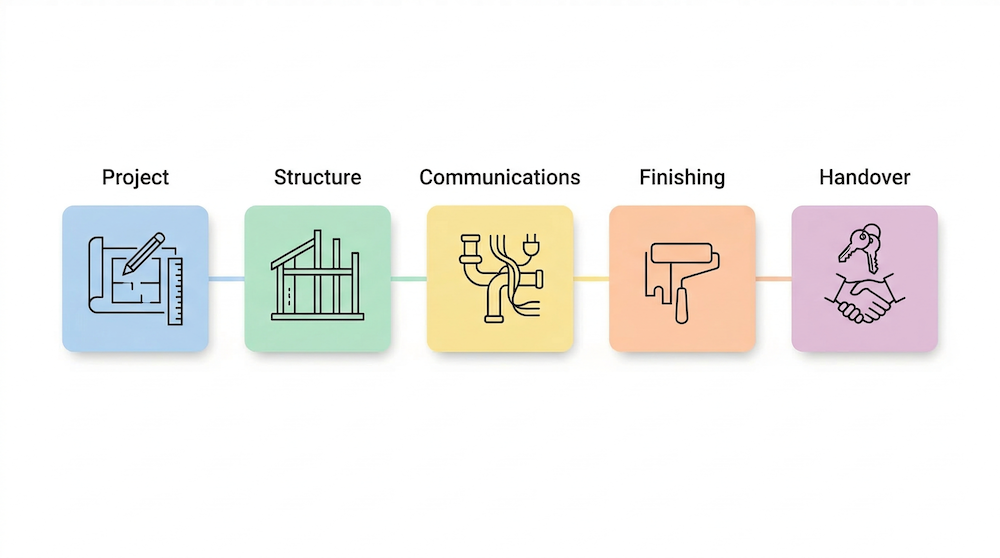
Stage 1: Preparation and Design (1-4 Months)
Select an architect and structural engineer who have proven experience with old buildings and understand traditional Cypriot construction methods. This is not a job for a generalist.
Conduct comprehensive technical surveys to accurately assess the condition of foundations, load-bearing walls, and the roof structure.
Secure the necessary Planning and Building Permits from the local authorities by submitting detailed architectural and engineering plans.
Stage 2: Structural Works (3-6 Months)
Reinforce the foundation, meticulously repair cracks in the stonework, and repoint the walls using appropriate lime-based mortar to ensure stability and breathability.
Repair or completely replace the roof beams, install modern waterproofing membranes, and lay traditional terracotta tiles to maintain the authentic look.
Incorporate modern seismic reinforcements, such as steel ties or concrete ring beams, to ensure the building complies with Cyprus’s stringent anti-seismic standards.
Stage 3: Engineering Networks and Utilities (1-2 Months)
Completely replace all electrical wiring and plumbing systems to meet current safety codes and accommodate modern appliances.
Install modern, efficient heating and air conditioning systems, such as air-source heat pumps or VRV systems, which are ideal for the Cypriot climate.
Boost energy efficiency by fitting solar panels for hot water and electricity, along with high-performance insulation in the roof and floors to reduce long-term running costs.
Stage 4: Interior and Exterior Finishing (3-5 Months)
Carefully restore original wooden windows and doors or commission new ones crafted in a historically appropriate style to preserve the home’s character.
Apply breathable lime-based plaster to interior walls, leaving sections of exposed stone as features, and lay flooring that complements the traditional aesthetic.
Create a harmonious interior design that blends authentic elements—such as arched doorways, wall niches, and fireplaces—with contemporary comforts and functionality.
Stage 5: Handover and Landscaping (1 Month)
Obtain the Certificate of Final Approval from the municipal authorities, which officially certifies that all work was completed according to the approved permits.
Complete all landscaping and exterior works, including patios, pathways, and garden planting, to create a polished and inviting property.
Case Study: Renovation of a House in Lefkara Village
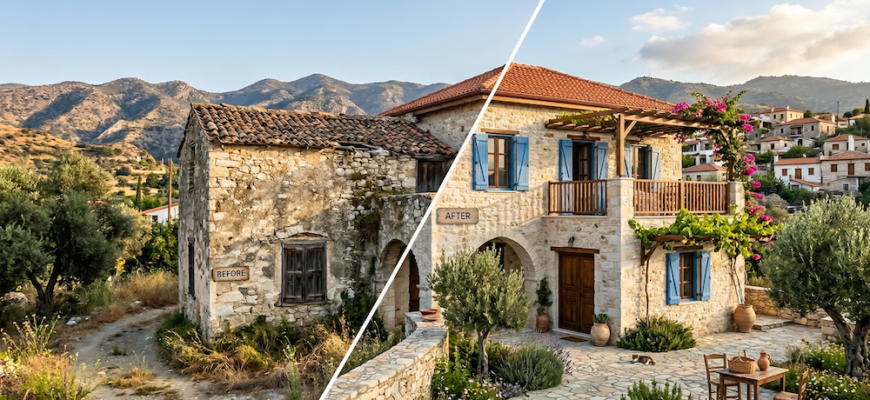
The Property “Before”: 1920s Ruins
- Area: 120 sq.m.
- Condition: Partial roof collapse, significant cracks in load-bearing walls, and a complete absence of modern utilities.
- Purchase Cost: €60,000.
Process and Renovation Costs
- Duration: 14 months.
- Key Works: Full roof replacement using traditional methods, strengthening walls with concealed steel ties, and installation of an energy-efficient heat pump system.
- Total Renovation Cost: €180,000 (€1,500/sq.m.).
Results “After”: Modern Comfort in a Historic Shell
- Current Market Value: Approximately €350,000.
- Projected ROI (on Sale): Roughly 45% on the total invested capital (€350k – €60k – €180k).
Find Your Expert Team for Restoration
From my 16 years of experience, I can tell you that picking the right team is 80% of your success when renovating stone houses. You need to look for true craftsmen who understand and love working with stone, not just general builders. Always check their licenses, demand to see a portfolio of completed projects, and never hesitate to speak with their former clients.
Frequently Asked Questions (FAQ)
How Long Does Renovating a Stone House Typically Take?
On average, a full stone house renovation project takes between 12 to 18 months from the moment you purchase the property to final completion. This timeline includes the vital stages of design, planning, and securing permits.
Can I Get a Mortgage for Buying and Renovating Such a House?
Yes, it is possible. Certain Cypriot banks offer specialized loan products for such projects, but they will require a highly detailed architectural project and a comprehensive cost estimate prepared by an accredited and licensed company.
What Modern Materials Best Complement Traditional Stone?
Natural wood is perfect for exposed beams, pergolas, and window frames. Metal, particularly wrought iron, works beautifully for railing and gate elements. Large glass panels can be used for window openings where permitted, and a minimalist white plaster finish provides a clean contrast to exposed stonework.
How to Manage the Renovation Process Remotely If I’m Not in Cyprus?
The key solution is to hire a professional for “author’s supervision” services from your architect or an independent project manager. They act as your eyes and ears on the construction site, providing regular, detailed photo and video reports and ensuring your vision is executed perfectly.