

I’m Oliver Bennett, a private realtor who has called Cyprus home for over 16 years. Having moved here from Europe myself, I’ve built a career helping fellow expats and investors find their footing—whether that means navigating real estate, securing residency, or integrating into the local business scene. Through my Cyprus Sunset blog, I share firsthand, practical insights, because I believe in turning opportunities into realities. This guide is built on that experience.
The Professional’s Guide to Business Etiquette in Cyprus: Why It’s Your Superpower in 2026
Effective business etiquette in Cyprus is more than just polite manners; it’s the fundamental currency that underpins success for ambitious professionals and expatriates. Here, cultural nuances like building genuine trust through personal connections are what truly drive deals, not aggressive sales tactics. For anyone new to the island, networking is not merely about attending an event and collecting cards—it’s the patient art of forging long-term relationships that unlock exclusive investment opportunities and collaborative partnerships. As we move into 2026, mastering this approach is critical for boosting your credibility in a market that uniquely blends warm Mediterranean traditions with fast-paced global business. In my work, I’ve seen clients secure off-market properties simply because their etiquette-savvy approach turned a first meeting into a trusted bond. Ignoring these unwritten rules can lead to alienation in this close-knit community, but embracing them gives you a decisive competitive edge.
What a Strong Professional Network in Cyprus Is and Why It Matters for Expats
At its core, networking is the strategic process of creating and nurturing intentional, mutually beneficial connections. In Cyprus, professional networking prioritizes establishing deep-rooted trust and long-term relationships over securing quick, transactional wins. For expatriates, these carefully cultivated connections serve as a vital lifeline, providing unfiltered access to critical local insights, off-the-record business opportunities, and guidance on navigating the island’s social fabric. Over the years, I’ve guided countless newcomers who successfully leveraged their networks to accelerate their integration, sidestepping the common feeling of isolation in a community where personal recommendations and established bonds are paramount.
The 2026 Shift: How Globalisation is Reshaping “Filoxenia” in Business
Globalisation in 2026 continues to introduce a vibrant mix of international influences to Cyprus, transforming the ancient concept of “filoxenia”—our cherished tradition of hospitality—into a dynamic business asset. The influx of digital nomads, remote workers, and international corporations means traditional Cypriot customs are now blending with global business practices, making cultural adaptability an essential skill. I’ve personally observed how the tech hubs in Limassol have become magnets for global talent, leading to a rise in hybrid events that merge virtual and in-person professional networking. This evolution requires a delicate balance: maintaining the swift pace of global enterprise while honoring the warmth and personal touch that defines Cypriot business culture.
Trust is the True Currency: Building Credibility in a Close-Knit Community
In the interconnected business circles of Cyprus, trust is not just a virtue; it is the true currency that underpins every significant interaction. Credibility is built slowly, fortified over time through consistent, reliable actions and the powerful endorsement of personal referrals. Expats who are willing to be authentic and share their genuine stories often find they are accepted into the community much faster. From my own experience, I recall a client who earned a pivotal introduction to an influential developer simply by volunteering at a local charity event. That single act of community engagement demonstrated character and ultimately led to a high-yield property investment. To succeed here, you must prioritize reliability to transform casual acquaintances into steadfast business allies.
Understanding the Cypriot Business Culture: The “Siga-Siga” Mindset
The ‘Siga-Siga’ (Slowly, Slowly) Principle in Business Deals and Relationship Building
The “siga-siga” philosophy encourages a measured, deliberate pace in Cypriot business, creating the necessary space to foster deeper professional bonds. Attempting to rush a negotiation or push for a quick decision is often perceived as a sign of distrust; demonstrating patience, on the other hand, is a powerful signal of respect and serious intent. In the many real estate negotiations I’ve managed for my clients, allowing ample time for rapport-building and informal conversation has consistently yielded more favorable terms than an aggressive, fast-paced approach ever could. You can apply this principle by scheduling follow-up meetings without pressure and allowing initial discussions to evolve organically into solid partnerships.
“In Cyprus, a quick ‘yes’ is less valuable than a slow, considered ‘yes’. Patience demonstrates respect and builds the foundation for a lasting partnership.”
— Oliver Bennett
Coffee Culture as a Business Tool: From Frappé Meetings to Formal Negotiations
In Cyprus, coffee meetings serve as an essential bridge between casual conversation and serious business discussions. These informal gatherings, often held over a classic frappé or a traditional Cypriot coffee, are the primary forum for building rapport before diving into contracts and negotiations. I have initiated and sealed multi-figure property deals that began with a relaxed coffee by the sea, where the unhurried atmosphere helped reveal my counterpart’s true intentions and priorities. Use these opportunities to gauge potential partners, and I always advise choosing a local café over a generic chain to demonstrate your appreciation for authentic Cypriot culture.
Navigating Hierarchy: Showing Respect for Age and Position
Cypriot business culture retains a strong sense of hierarchy, placing significant importance on showing respect for elders and individuals in positions of authority. It is customary to address senior colleagues or potential partners with formal titles and to show deference in group discussions. This sign of respect is not just a formality; it’s a key component of building trust. In my webinars on relocation and business integration, I consistently advise expats to be particularly observant of this dynamic in meetings, as acknowledging seniority can significantly accelerate trust-building, especially in traditional sectors like finance, law, and real estate.
Essential Greek Phrases That Build Instant Rapport
Making an effort to use a few basic Greek phrases shows respect and a genuine interest in the local culture, which can go a long way in building connections.
| Phrase (Greek/Phonetic) | English Translation | When to Use |
| Kalimera (kah-lee-MEH-rah) | Good morning | Morning greetings at the start of meetings or entering an office. |
| Kalispera (kah-lee-SPEH-rah) | Good evening | Introductions and greetings in the late afternoon or evening. |
| Yia sas (YAH sahs) | Hello/Goodbye (formal) | A respectful way to greet or part from colleagues and business partners. |
| Efharisto (ef-hah-ree-STOH) | Thank you | Expressing gratitude after receiving assistance or at the end of a meal. |
| Parakalo (pah-rah-kah-LOH) | Please/You’re welcome | Essential for making polite requests or responding to thanks. |
Core Principles of Cypriot Business Etiquette to Master
To successfully navigate the professional landscape here, mastering the core principles of Cypriot business etiquette is essential. This involves understanding the unwritten rules surrounding punctuality, meeting dynamics, appropriate dress code, gift-giving customs, formal greetings, and the local negotiation style. Adherence to these pillars ensures your interactions are smooth, respectful, and aligned with cultural expectations, laying a strong foundation for business success.
1. Greetings, Introductions, and Forms of Address
First impressions are incredibly important. Always begin a business meeting with a firm handshake, direct eye contact, and a warm smile. Use formal titles like “Mr.” or “Ms.” followed by the surname unless you are explicitly invited to use first names. In Cyprus’s multicultural business environment, especially in cities like Limassol and Paphos, it’s also a thoughtful gesture to confirm pronunciation and preferred forms of address. From my experience, taking this small step can prevent misunderstandings and demonstrates a high level of professional respect.
2. Punctuality and the Flexible Pace of Meetings
While you should always strive to arrive on time for any scheduled meeting, it’s wise to be mentally prepared for a more flexible start time from your Cypriot counterparts. Meetings may begin a few minutes late, a reflection of the relaxed “siga-siga” pace. It’s effective to have a clear agenda prepared, but remain open to letting the conversation flow organically. Some of my most productive client sessions have been those that extended beyond the planned schedule to explore new opportunities that arose naturally during our discussion.
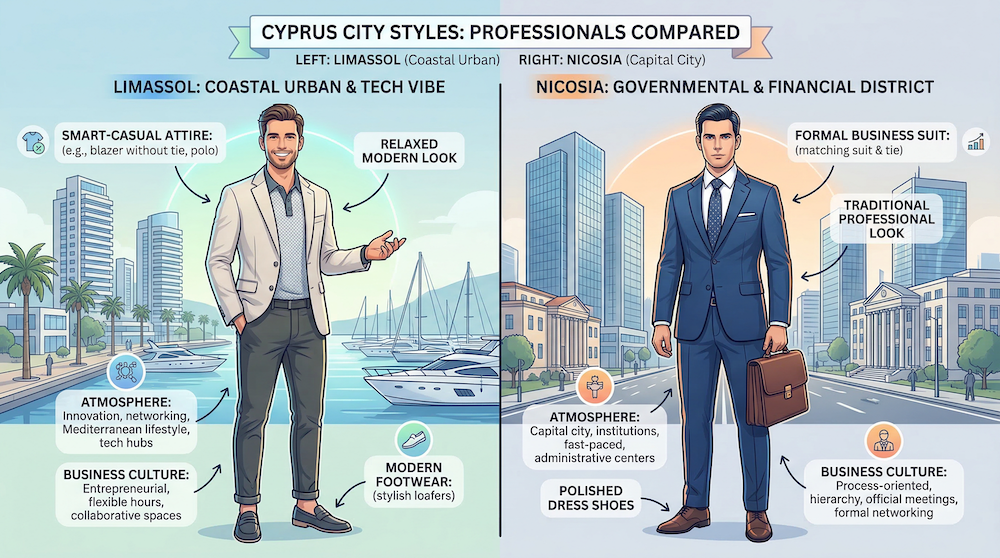
3. Dress Code: Adapting from Limassol Tech Hub to Nicosia Boardroom
Your attire should adapt to the specific business context, which can vary significantly across the island. In Limassol’s modern tech hubs and marina-front offices, a smart-casual dress code of polo shirts, quality trousers, or chinos is perfectly acceptable and aligns with the city’s dynamic, international vibe. However, for meetings in the governmental and financial districts of Nicosia, a formal business suit is the standard. This sartorial adaptability is more than just about fitting in; it signals cultural awareness and respect. I always advise investors to confirm the expected dress code or match their attire to the venue for a stronger, more positive reception.
4. The Art of Gift-Giving and Dining Etiquette
While not mandatory, offering a small, thoughtful gift like a quality bottle of local wine, a book about your home country, or fine pastries is a warmly appreciated gesture, especially after a successful meeting or when invited to someone’s home. During business meals, always wait for your host to begin eating and make the first toast. Dining is a social experience, so engage in conversation. I recall one family relocation I managed where the professional relationship was significantly strengthened over a series of shared dinners that built personal connection beyond the business transaction.
5. Negotiation Style: The Importance of Indirect Communication
Cypriot negotiation style generally favors subtlety and harmony over direct, aggressive tactics. Instead of making bold demands, it’s more effective to use open-ended questions to probe for information and explore underlying interests. Direct confrontation is often counterproductive. Patience is your greatest asset in these situations. I’ve successfully negotiated property prices by focusing on creating mutual benefits and framing the discussion as a collaborative effort, a patient approach that has yielded savings of 10-15% for my clients.
Essential Networking Etiquette for Cypriot Business Circles
Mastering networking etiquette is fundamental for building a strong professional base in Cyprus. Success in this area hinges on understanding the nuances of how introductions are made, the art of listening, and the importance of a timely follow-up. A professional and respectful demeanor is key.
The Handshake and Introduction: First Impressions Matter
A firm handshake paired with steady eye contact establishes a positive and confident first impression. When introducing yourself, state your name and profession clearly. If you share a mutual acquaintance with the person you are meeting, mentioning their name can provide immediate context and create a warmer connection. This simple act of linking yourself to their existing network can be a powerful icebreaker.
The Digital Business Card: Be Prepared and Modern
While the world is increasingly digital, networking etiquette in Cyprus often bridges the old and the new. Use LinkedIn’s QR code feature or similar apps for a quick, modern exchange of contact information, especially in tech-focused circles. However, always carry a small supply of high-quality physical business cards. From my experience, having a hybrid approach is most effective, as some senior professionals still prefer the traditional card exchange. Presenting both options shows you are prepared and respectful of all preferences.
The Art of Listening: Ask Open-Ended Questions
The most effective networkers listen far more than they speak. Instead of waiting for your turn to talk, focus on asking open-ended questions that invite detailed responses. Queries like, “What have been the most interesting challenges you’ve faced in your industry this year?” or “What do you enjoy most about your work?” can uncover valuable opportunities and demonstrate a genuine interest in the other person, fostering a much stronger connection.
Small Talk Topics: Safe and Unsafe Subjects
Small talk is the gateway to deeper business conversations. Stick to safe, positive topics such as travel experiences, Cypriot food and wine, hobbies, or the beautiful local scenery. It is generally wise to steer clear of potentially divisive subjects like local politics, religion, or the island’s history unless your counterpart brings them up first. Keeping the conversation light and agreeable ensures a positive atmosphere for building rapport.
How to Gracefully Join and Exit Conversations
Joining an existing conversation at a networking event can feel daunting, but it’s easy if done politely. Look for a group with open body language, wait for a slight pause, and join with a relevant compliment or question, such as, “I couldn’t help but overhear you discussing the real estate market, I find that fascinating.” To exit, simply wait for a lull, excuse yourself politely by saying you need to greet someone else or get a drink, and express that it was a pleasure speaking with them. Promising a follow-up can make the exit feel even more natural.
Strategic Networking for Real Estate & Relocation Success (2026 Outlook)
“For an investor in 2026, the right network in Cyprus isn’t just an asset; it’s the key that unlocks access to off-market properties, reliable legal advice, and accelerated residency processes.”
— Oliver Bennett
Key People to Connect With: Developers, Lawyers, and Financial Advisors
For anyone serious about property or relocation, building a targeted network is crucial. Prioritize linking with reputable property developers for direct market insights, connecting with experienced lawyers for crucial legal support on contracts and residency, and engaging with independent financial advisors for sound investment strategies. I frequently connect my clients with trusted professionals from my network, including the experts at partners like DOM, a leading real estate agency in Cyprus, as these relationships are instrumental in streamlining transactions and ensuring a smooth relocation process.
Where to Find High-Value Professional Networking Events in Cyprus
High-value networking events in Cyprus are plentiful, particularly in the business hubs of Limassol and Nicosia. Business associations and the Cyprus Chamber of Commerce host regular mixers that offer excellent opportunities for broad professional connections. For more targeted networking, look for industry-specific seminars and expos, such as real estate forums or technology conferences. In Limassol, tech meetups are a fantastic way to connect with innovators, while events in Nicosia are often geared toward the finance and legal sectors. I’ve personally attended many of these functions, and they are invaluable for helping my clients find the right partners. A typical networking event here will host between 50-200 attendees, offering a healthy mix of local professionals and international expats.
| Event/Organization Type | Key Cities | Best For… |
| Chamber of Commerce | Limassol, Nicosia, Paphos | Connecting with established business leaders and government officials. |
| Tech Meetup | Limassol, Nicosia | Finding tech partners, developers, and digital marketing experts. |
| Real Estate & Investment Expo | Nicosia, Limassol | Meeting property developers, investors, and legal advisors. |
| Expat Community Gatherings | Paphos, Limassol | Informal networking and sharing relocation experiences. |
Leveraging Digital Platforms for Pre-Relocation Networking (LinkedIn Focus)
Your networking should begin long before you land in Cyprus. Optimize your LinkedIn profile with keywords relevant to your industry and location, such as “Fintech Cyprus” or “Real Estate Investor Limassol.” Actively join and participate in relevant LinkedIn groups like “Cyprus Expats & Professionals.” Engaging with posts by commenting with insightful thoughts—rather than just “liking”—helps build your visibility and establish you as a thoughtful professional before you even arrive on the island, warming up future connections.
Top 5 Networking Tips for Professionals Building a Career in Cyprus
For those looking to build a successful career here, these top networking tips for professionals go beyond generic advice. In Cyprus, professional networking thrives on genuine interactions, a willingness to offer value first, and the discipline to build relationships over time.
1. Offer Value Before You Ask for Anything
The most respected networkers in Cyprus operate with a “give first” mentality. Before you even think about asking for a favor, find a way to offer value. This could be by sharing a relevant article, offering an insightful perspective on a market trend, or introducing two of your contacts who could benefit from knowing each other. This principle of reciprocity builds a foundation of trust and goodwill. I’ve helped clients secure their first major deals here simply by leading with free, valuable advice, which opened doors that would have otherwise remained closed.
2. Master the Art of the Follow-Up (The 24-48 Hour Rule)
A brief, personalized follow-up message sent within 24 to 48 hours of meeting someone can transform a fleeting encounter into a lasting connection. In your email or LinkedIn message, reference a specific point from your conversation to jog their memory and show you were genuinely listening. A simple note like, “It was great discussing the Paphos marina project with you,” is far more effective than a generic template. Many of my long-term client relationships, which have led to repeat investments, began with a single, thoughtful follow-up.
3. Be Genuinely Interested, Not Just “Interesting”
Many people approach networking with the goal of impressing others. In Cyprus, it’s far more effective to be interested rather than just trying to be interesting. Shift your focus from self-promotion to genuine curiosity about the other person. Ask about their projects, their goals, and the challenges they are facing. This approach not only builds stronger rapport but also uncovers needs that you might be able to help solve, making you a memorable and valuable contact.
4. Use LinkedIn to “Warm Up” Cold Connections
Instead of sending a generic “I’d like to connect” request on LinkedIn, take the time to warm up the connection. Follow your target contact, engage with their posts by leaving thoughtful comments for a week or two, and then send a personalized connection request that mentions your appreciation for their insights. This simple strategy significantly increases your chances of acceptance and eases the transition to an in-person meeting. Many of my most productive initial consultations have started this way.
5. Turn Online Connections into In-Person Coffee Meetings
The ultimate goal of digital networking is to foster real-world relationships. After a few positive interactions online, suggest a casual, in-person meeting. A simple “I’ve really enjoyed our conversations on LinkedIn. If you’re open to it, I’d love to continue the discussion over a coffee sometime next week” is a low-pressure and effective invitation. I’ve grown my entire professional network and initiated countless collaborative ventures through this simple but powerful practice.
Expert Insight: Costly Mistakes Newcomers Make (And How to Avoid Them)
After 16 years of living and working in Cyprus, I’ve seen many well-intentioned expats and investors make the same costly mistakes. Here are the most common pitfalls I’ve observed firsthand, and more importantly, how you can avoid them.
Mistake #1: Rushing the Relationship & Pushing for a Quick Deal
The most common error is trying to apply a transactional, high-pressure sales approach in a relationship-driven culture. Pushing for a decision too quickly erodes trust and can instantly kill a potential partnership. Business here moves at the pace of trust. You must learn to build the relationship slowly, read the social cues, and wait for clear signals from your counterpart before advancing to the next stage of a deal.
Mistake #2: Underestimating the Power of a Personal Referral
Cold calls and unsolicited emails have an extremely low success rate in Cyprus. The entire business community runs on a network of personal referrals and warm introductions. One of my clients learned this the hard way, facing months of delays after approaching developers directly. In contrast, when I introduce a new investor through my established network, the timeline for securing meetings and information is often cut by more than half. Never underestimate the power of a “friendly introduction.”
Mistake #3: Ignoring Social Events and After-Work Gatherings
Some of the most important business connections in Cyprus are forged not in the boardroom, but at social events, barbecues, and after-work drinks. Dismissing these gatherings as “unimportant” is a huge mistake. These informal settings are where true bonds are formed and where people get a sense of your character outside of a professional context. I always advise my clients to accept social invitations and attend community events—I’ve personally sourced some of my best real estate leads at a weekend barbecue.
Real-Life Anecdote: The Multi-Million Euro Deal That Was Sealed Over a Frappé
In 2023, I was working with an investor looking to buy property in Cyprus, specifically a luxury villa. Instead of formal pitches, my first “meeting” with a key local developer was a casual frappé chat by the sea in Paphos. We talked about everything but business for an hour—family, football, the best local tavernas. Over the next few weeks, we met for coffee twice more. This patient, relationship-first approach built a deep level of trust. Because of it, he offered my client a stunning, off-market villa that had never been publicly listed. The multi-million euro deal was eventually sealed, a direct result of a relationship that started with small talk and a €3 coffee.
FAQ: Navigating Professional Life in Cyprus
Is English widely spoken in business settings in Cyprus?
Yes, English is overwhelmingly the dominant language in business, especially in international hubs like Limassol and Nicosia. According to a 2025 Eurobarometer survey, approximately 80% of Cypriots have a high level of English proficiency. In my daily interactions with lawyers, bankers, and developers, all communications are in English, which makes it very accessible for expats.
What is the typical work-life balance like for professionals in Cyprus?
Cyprus is renowned for offering an excellent work-life balance. The typical workday adheres to a 9-to-5 structure, often with shorter hours in the summer months, as confirmed by recent ILO data for the region. This cultural emphasis on personal time allows ample opportunity for family, social life, and enjoying the island’s famous beaches and mountains, a major draw for the professionals I help relocate.
How important is family in Cypriot business culture?
Family is incredibly central to Cypriot culture, and these ties often extend into the business world. Family connections can influence professional networks, and showing an interest in your counterpart’s family is seen as a sign of warmth and goodwill. Mentioning your own family can also help to build a strong personal rapport. This familial aspect is a key theme explored in cultural studies from institutions like the University of Cyprus.
Are business gifts expected, and what is appropriate?
Business gifts are not a strict requirement, but they are a very welcome gesture of goodwill. If you do offer a gift, it’s best to choose something thoughtful but modest, such as high-quality Cypriot sweets, a nice bottle of wine, or a craft from your home country. It’s important to avoid anything overly extravagant, as this can create a sense of discomfort or obligation, which runs contrary to the goal of building a genuine relationship.