
Essential Cybersecurity for Digital Nomads in Cyprus 2026: An Introduction
As a seasoned digital nomad, you’ve probably heard it all before. But as someone who’s lived and worked in Cyprus for over 16 years, I can tell you that the allure of 300 sunny days and appealing tax incentives often makes crucial cybersecurity practices an afterthought. My name is Oliver Bennett, and after moving here from Europe in 2010, I’ve dedicated my work to helping expats relocate securely, sharing my insights on my blog, Cyprus Sunset. This comprehensive guide is built on my direct experience guiding families through the complexities of safe property deals and navigating the rising tide of online threats unique to our island. It focuses specifically on cybersecurity for digital nomads, delivering a clear-eyed view on the essentials of online security for remote work. We will cover critical risks, from data breaches on public networks to targeted scams, and offer robust protection strategies tailored to life in Cyprus. Whether you’re considering an apartment in Limassol or a villa in Paphos, ignoring this advice can turn your Mediterranean dream into a financial or logistical nightmare. Let’s ensure your nomadic lifestyle here is both successful and secure.
Why Online Security is Critical for Your Remote Work Lifestyle in Cyprus
The freedom of remote work in Cyprus is unparalleled—imagine coding from a beachside cafe or managing an international team from your laptop. However, this very lifestyle massively amplifies online security risks. As a digital nomad, you are constantly exposed to vulnerabilities. Using public Wi-Fi in co-working spaces or hotels can lead to data breaches, exposing sensitive information like bank details, client project files, or login credentials for collaborative tools. From my experience, I’ve seen clients lose thousands of euros from a single hacked email exchange during a property transfer, turning their dream move into a devastating financial event.
The stakes are incredibly high: a single breach presents a significant risk of direct financial loss, such as diverted rental deposits, or severe reputation damage if your freelance contracts or client data are compromised. For any digital nomad here, these threats are often intertwined with the relocation process itself—phishing scams frequently mimic communications from lawyers about title deeds or visa applications, expertly exploiting the excitement and stress of the move. Data from a 2025 Europol threat analysis highlights a 30% rise in cybercrimes targeting EU migrants, with Cyprus showing notable spikes in identity theft. Without robust online security, your remote work setup becomes a significant liability. You must prioritize it to protect your income, your privacy, and your peace of mind while enjoying the unique vibe of this island.
The High-Stakes Reality: Securing Your Cyprus Relocation and Investments
Relocating to Cyprus as a digital nomad often involves more than just finding a good Wi-Fi spot; it means blending your work life with major life changes, like buying a property or applying for permanent residency. These high-value transactions dramatically amplify your cyber risk profile, as hackers specifically target them for large, immediate payoffs. I have personally advised several clients who came perilously close to losing their life savings due to cleverly intercepted bank transfers. This section breaks down the essential protective measures for your most critical moves.
Securing Your Property Purchase: Protecting Deposits and Title Deed Transfers
Property transactions in Cyprus involve numerous wire transfers of large sums and the digital exchange of sensitive documents, making them a prime target for sophisticated cyber attacks. It’s a non-negotiable rule: always verify bank account details over the phone or in person, never relying solely on email confirmation, as scammers can alter invoices with startling precision. For all title deed processes, insist on using encrypted communication channels. In one recent case, a client of mine in Limassol narrowly avoided a six-figure fraud by calling his lawyer to double-check the bank details he’d received in an email. To add extra layers of protection, you can consult with vetted professionals to help you buy property in Cyprus, as they follow established security protocols.
Protecting Your Identity: Safeguarding Documents for the Digital Nomad Visa & Permanent Residency Applications
Your passport scans, bank statements, and proofs of income are digital gold for identity thieves. You must store these critical documents in encrypted cloud folders or on a password-protected external drive, and only share them via secure, official portals when absolutely necessary. When applying for Cyprus’s digital nomad visa, the Yellow Slip, or permanent residency, exclusively use the official government websites and be wary of third-party “agents” who ask for documents via unsecured email. Over the years, I’ve helped numerous families encrypt their application submissions, preventing data breaches that could have caused long delays or even outright rejection. Remember, a stolen identity can completely derail your residency plans—proactive protection is your best defense.
Top 5 Cybersecurity Threats Every Digital Nomad Faces in 2026
The very nature of being a digital nomad in Cyprus exposes you to an evolving set of digital threats, from the casual risk of unsecured Wi-Fi to highly sophisticated scams. Here is a practical breakdown of the top five dangers you’ll face, based on my on-the-ground observations and findings from sources like the 2026 ENISA threat landscape report.
- The Public Wi-Fi Paradox: The convenience of free Wi-Fi in cafes, airports, and co-working spaces is undeniable, but it often exposes your unencrypted data to eavesdroppers on the same network. In Cyprus, many free networks in popular tourist areas lack robust security, making them a playground for criminals looking to intercept emails, passwords, or financial information.
- Hyper-Targeted Phishing & Social Engineering: Scammers are adept at creating emails and messages that exploit the anxieties associated with relocation. Be skeptical of communications that appear to be from real estate agents, government officials, or lawyers, especially those creating a false sense of urgency, like “urgent visa updates” or “final payment warnings,” which often lead to malware or credential theft.
- Physical Device Theft as a Gateway to Data Breach: A stolen laptop from a busy Limassol cafe is more than just a financial loss; it’s a potential gateway to a catastrophic data breach. Even a quick coffee run can end with a missing backpack. If the device isn’t encrypted, thieves can easily access sensitive client data, personal files, and saved passwords, leading to blackmail, reputational damage, or further financial fraud.
- Malware & Ransomware Attacks: A transient lifestyle often involves downloading new apps, connecting to various networks, and using unfamiliar devices, all of which increase your risk of infection. Ransomware can lock your entire digital life, demanding a hefty payment for its return—I’ve seen fellow nomads forced to pay after their devices were compromised in shared workspaces.
- Identity & Credential Compromise: Using weak or repeated passwords across multiple accounts creates a dangerous domino effect. Once one account is breached—whether it’s your social media, email, or a simple forum login—criminals can use that information to access more critical accounts, like online banking and cloud storage, amplifying the damage exponentially for any remote worker.
Cyprus-Specific Threats: Navigating the Local Digital Landscape
The unique blend of a booming tourism industry and emerging tech hubs in Cyprus creates a distinct set of digital vulnerabilities for the unsuspecting digital nomad. While public Wi-Fi is plentiful in co-working spaces and cafes, so are the associated threats. Mobile data offers a more secure alternative but can become costly, and over-reliance without precautions is not a foolproof strategy. It’s vital to focus on maintaining a secure network connection, especially in bustling districts like Limassol and Paphos.
Public Wi-Fi Risks in Paphos & Limassol Hotspots
The temptation to connect to free Wi-Fi in a trendy Paphos cafe or along the Limassol marina is strong, but these networks are hotbeds for man-in-the-middle attacks, where criminals intercept your data as it travels between your device and the router. A 2026 report from the Cyprus Computer Emergency Response Team (CERT) noted that an estimated 25% of public networks in high-traffic areas are compromised or improperly secured. My advice is simple: use your smartphone’s personal hotspot whenever handling sensitive information.
Sophisticated Phishing Scams Targeting Cyprus Real Estate Buyers
Scammers are increasingly sophisticated, crafting fake emails that perfectly mimic legitimate real estate agencies or law firms, right down to the logos and email signatures, with one crucial change: the bank account details for a deposit or payment. I have personally witnessed property deals nearly derailed at the final stage because of such scams. Always protect yourself by verbally verifying any payment instructions with a known contact. This risk is particularly acute for those exploring real estate investment in Cyprus, as the high transaction values make these deals prime targets for cybercriminals.
“In my years here, the most devastating scams I’ve seen target property buyers. They intercept one email, change the lawyer’s bank details, and an entire life savings is gone in an instant. This is Threat Number One.”
— Oliver Bennett, Private Realtor & Cyprus Resident
Your Digital Nomad Security Toolkit: VPNs vs. Antivirus vs. Password Managers
Your primary line of defense is built from a “security stack” of essential tools: a VPN, antivirus software, and a password manager. Understanding how they work together is key. A VPN acts like a private, encrypted tunnel for your internet traffic, hiding your IP address and protecting your data on public networks. Antivirus software is your digital immune system, actively scanning for and neutralizing malware and ransomware. A password manager not only creates and stores unbreakably complex passwords but also simplifies the use of two-factor authentication. Encrypted storage services provide a final layer of safety for your most important files. This table offers a quick comparison to help you choose wisely for Cyprus’s digital environment.
| Tool Category | Primary Function | Top 3 Recommendations for Cyprus (including one open-source) |
| VPN | Encrypts connections, hides IP on public networks | ExpressVPN (fast for streaming), NordVPN (strong EU servers), Mullvad (open-source, privacy-focused) |
| Antivirus/Anti-Malware | Scans for threats, blocks ransomware | Bitdefender (real-time protection), Malwarebytes (lightweight scans), ClamAV (open-source alternative) |
| Password Manager | Generates/stores strong passwords, enabling 2FA | LastPass (user-friendly), Bitwarden (open-source, free), 1Password (advanced encryption) |
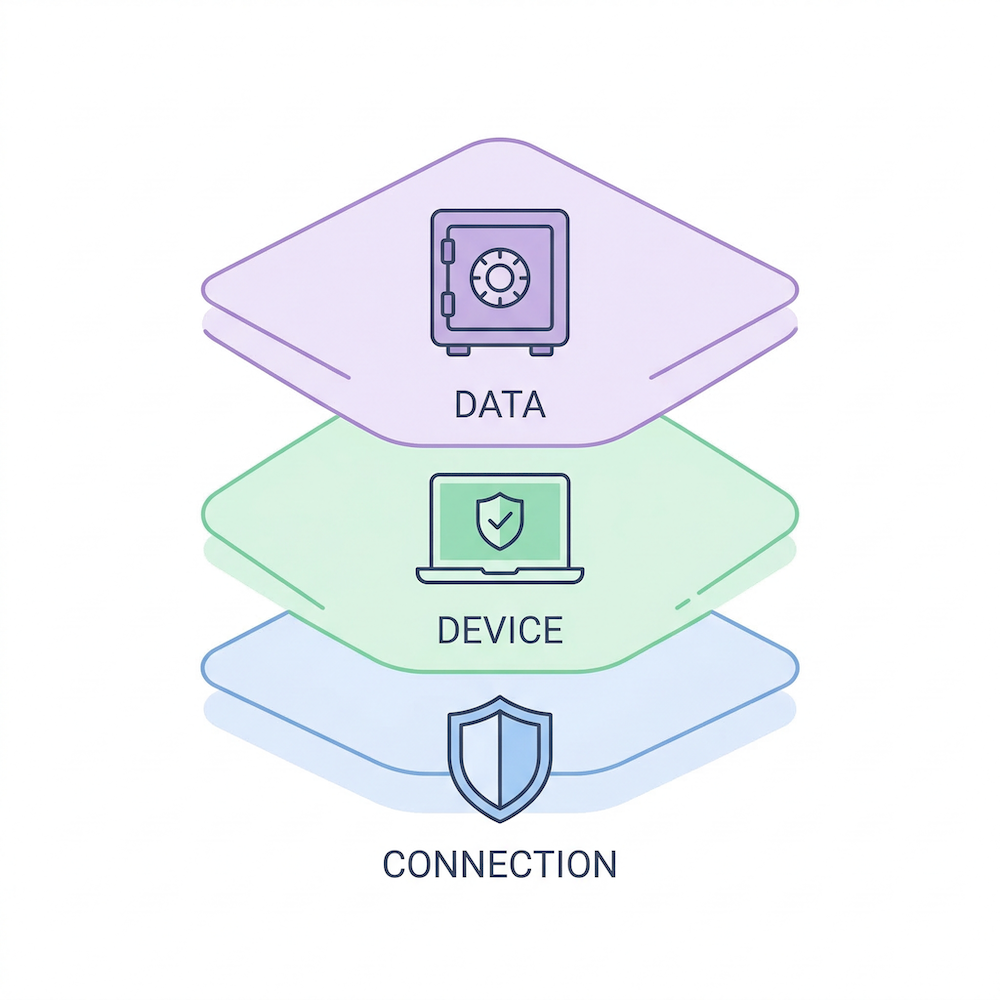
The 3-Layer Security Blueprint: A Step-by-Step Implementation Guide
Layer 1: Fortifying Your Internet Connections
The VPN (Virtual Private Network): Choosing a Provider Under EU GDPR in Cyprus
A VPN is non-negotiable. When selecting a provider, ensure it is fully compliant with the EU’s General Data Protection Regulation (GDPR) to guarantee your data privacy is legally protected. For use specifically in Cyprus, prioritize VPNs with strict no-logs policies and servers located in or near Europe for optimal speed and reliability.
Securing Your Long-Term Rental Wi-Fi: A First-Day Checklist
The moment you move into a new rental, your first task should be to secure the Wi-Fi. Immediately change the router’s default administrator password and update the network password. Enable the highest level of encryption available, preferably WPA3. When searching for long term rentals in Cyprus on trusted platforms, you can even ask the agent or landlord about their router security policies beforehand.
Your Smartphone as a Secure Personal Hotspot: When and How to Use It
Your smartphone’s hotspot is one of your most valuable security tools. Activate it for a trusted, private connection whenever you need to handle sensitive tasks in public spaces. Be sure to set a strong password for your hotspot and monitor your data usage to avoid unexpected mobile charges.
Layer 2: Hardening Your Devices (Laptop, Phone, Tablet)
Essential Software: Modern Antivirus, Firewall & Anti-Malware
Install a comprehensive security suite from a reputable provider on all your devices. Ensure that real-time protection and automatic updates are enabled, as this allows the software to defend against the latest, evolving threats without you having to think about it.
Full-Disk Encryption: Your Last Line of Defense Against Physical Theft
Full-disk encryption is your ultimate safety net if your laptop or phone is lost or stolen. It scrambles all the data on your hard drive, making it unreadable without your password. Enable BitLocker on Windows or FileVault on macOS—it’s a simple, one-time setup that provides immense peace of mind.
Remote Wipe Capabilities: The Nuclear Option for a Stolen Device
Prepare for the worst-case scenario by enabling remote wipe features on your devices. Services like Apple’s Find My or Google’s Find My Device allow you to locate, lock, or completely erase all data from your device remotely, ensuring your personal and professional information doesn’t fall into the wrong hands.
Layer 3: Protecting Your Data and Digital Identity
Password Managers & Two-Factor Authentication (2FA): Your Ultimate Account Guardians
A password manager and 2FA are a powerful combination for securing your digital identity. Use the manager to generate and store long, unique passwords for every single one of your accounts. Then, enable 2FA wherever possible, which requires a second form of verification (like a code from an app) to log in, rendering a stolen password useless on its own.
Smart Cloud Storage and Encrypted Backup Strategies
Choose a cloud storage provider that offers end-to-end encryption and is compliant with GDPR, such as Proton Drive or Tresorit. Automate your backups so that a current copy of your important data is always stored securely, protecting you from data loss due to device failure, theft, or a ransomware attack.
Understanding Your GDPR Obligations as a Nomad in the EU
Even if you are not an EU citizen, by residing and working in Cyprus, you may be subject to GDPR, especially if you handle the personal data of EU residents. Understanding your basic obligations to handle data responsibly is crucial for avoiding potential fines and legal issues.
A 7-Step Checklist for Bulletproof Online Security While Working Remotely
Becoming a secure digital nomad is about building smart habits. I’ve developed this checklist over years of guiding clients through safe relocations, and it serves as a powerful foundation for your daily routine.
- Implement Strong, Unique Passwords for Everything (via a password manager). Your password manager will generate complex, unguessable passwords for each site. This single step prevents a breach on one site from compromising your other accounts. Never reuse passwords.
- Enable Two-Factor Authentication (2FA) on all critical accounts. This adds a crucial verification layer, typically a code sent to your phone or generated by an app like Authy. Even if a thief steals your password, they won’t be able to access your account without this second physical key.
- Keep All Software and Operating Systems Updated religiously. Those update notifications aren’t suggestions; they are critical patches that fix newly discovered security vulnerabilities. Set your devices to auto-update to ensure you are always protected from the latest known exploits.
- Encrypt Your Devices’ Hard Drives before you travel. Using built-in tools like BitLocker (Windows) and FileVault (macOS) or third-party software like VeraCrypt makes your data completely unreadable if your device is stolen. This is absolutely essential for anyone working from transient locations.
- Automate Your Data Backups to an encrypted cloud service. Schedule daily backups of your critical files. This not only protects you from device theft or failure but also serves as your ultimate recovery plan in the event of a ransomware attack, allowing you to restore your files without paying a ransom.
- Use a Reputable VPN on all untrusted networks (i.e., any network that isn’t your own). A VPN encrypts all your internet traffic, making it unreadable to anyone snooping on the network. This is crucial for maintaining your privacy and security when using Wi-Fi in Cyprus’s cafes, hotels, or co-working spaces.
- Practice Vigilance & Skepticism with all unsolicited emails and messages. Treat unexpected attachments and links with suspicion. Before clicking, independently verify the sender’s identity through another channel. Report any phishing attempts to help protect the wider community.
According to a 2026 Norton cybersecurity report, consistently following practices like these can reduce your personal risk of a significant breach by as much as 70%.
Future-Proofing for 2026: The Next Wave of Digital Threats
Recognizing AI-Powered Scams and Deepfake Phishing Attempts
As we move toward 2026, artificial intelligence is making scams more convincing than ever. Be prepared for deepfake audio and video calls where criminals impersonate bank officials, colleagues, or even family members. Learn to spot the subtle anomalies, such as unnatural vocal tones or awkward pauses, that can expose these AI-powered fakes.
Securing Your Digital Finances: Protecting Online Banking and Crypto Wallets
Your digital finances require heightened security. For cryptocurrency, use a hardware wallet (a physical device) to store your assets offline, away from online threats. For traditional online banking, use dedicated apps over web browsers and be vigilant about monitoring transaction notifications. Cyprus’s growing fintech scene is exciting, but it also attracts sophisticated financial fraudsters.
IoT Security: The Hidden Risks in Smart Devices in Airbnbs and Rentals
The ‘Internet of Things’ (IoT) devices in your rental—like smart locks, speakers, and TVs—can be a hidden security risk. These devices are often installed with weak, default passwords. Upon arrival at a new rental, check if you can change default passwords on accessible smart devices to prevent them from becoming a backdoor into your personal network.
Frequently Asked Questions (FAQ)
What are the top 3 recommended VPNs for speed and security in Cyprus?
For a balance of speed and robust security on Cyprus’s networks, I recommend ExpressVPN for its consistently fast performance, NordVPN for its powerful suite of security features and strong EU server presence, and Mullvad for those who prioritize open-source transparency and absolute privacy.
What should I do immediately if my laptop is stolen in Cyprus?
First, file a report with the local police to get an official case number. Second, use your remote wipe capabilities to erase all data from the device immediately. Third, change the passwords for all your critical accounts—email, banking, and cloud storage—starting with your primary email account. If identity documents were stored on the device, contact your embassy.
How does GDPR affect me as a non-EU digital nomad working from Cyprus?
As a resident working from an EU country, you are expected to handle personal data according to GDPR principles, especially if you have clients in the EU. This means using data securely, being transparent about its use, and obtaining consent where necessary. Non-compliance can lead to significant fines. Refer back to the guidance in Layer 3 for best practices.
Is it safe to use my credit card for a real estate deposit in Cyprus?
Yes, it can be safe, but only if conducted through verified and secure channels. Never send credit card information over email. Use official, encrypted payment portals provided by reputable companies. It’s always best practice to confirm any payment request by directly contacting a known representative from a trusted real estate agency in Cyprus like DOM beforehand.
Final Thoughts: Integrate Cybersecurity into Your Digital Nomad Routine
Ultimately, robust cybersecurity isn’t a destination; it’s a practice. For a digital nomad in Cyprus, maintaining strong online security allows you to focus on your remote work and enjoy the island lifestyle without the constant threat of a digital disaster. The key is to be proactive, not reactive. By building these security habits into your daily routine now, you are investing in your long-term success and peace of mind. Stay safe, stay protected, and make the most of your adventure.
Ready to Secure Your Cyprus Dream?
Safeguarding your relocation is just as important as finding the perfect view. For more practical insights based on my 16+ years of experience on the island, from secure property acquisition to navigating local life, explore our Cyprus life & real estate blog.